Featured Bioactive Ingredients & Raw Material Selections
Factory-direct wholesale extracts, clean-label plant protein hydrolysates, and physiological actives ready for rapid formulation testing and commercial scaling.
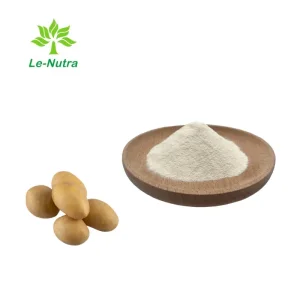
The Strategic Transformation of Plant-Based Protein Engineering
From basic aggregate powders to precision enzymatic hydrolysates and targeted bioactive peptide matrices: An in-depth structural analysis for brand formulators and enterprise procurement leaders.
Continuous enzymatic hydrolysis and low-temperature countercurrent extraction lines.
High-purity isolate powders, soluble hydrolysates, and bioactive botanical concentrates.
Targeted amino acid profiling reaching complete protein equivalence via legume-grain blends.
Supplying multinational nutraceutical, food tech, and beauty brands across EU, NA, and APAC.
The global food and wellness industry has crossed the chasm from first-generation crude mechanical flours and second-generation concentrates into third-generation bio-functional peptides. Today’s international consumers reject chalky mouthfeel, high sodium, and unrefined legume odors.
Modern formulation demands hyper-soluble, enzymatic isolates capable of maintaining optical clarity in functional beverages while sustaining rapid systemic plasma amino acid delivery equivalent to hydrolyzed animal whey.
Natural raw legumes inherently possess phytic acids, tannins, trypsin inhibitors, and oligosaccharides that cause gastrointestinal irritation and hinder mineral bio-absorption. In our advanced bioreactor arrays, these antinutritional factors are thoroughly decoupled.
Through controlled thermal inactivation and tailored multi-enzyme proteolysis, our factories achieve antinutritional degradation down to negligible parts-per-billion, securing ultra-gentle gut tolerance for clinical and infant formulations.
Plant protein efficiency relies on complementing limiting amino acids. While isolated pea protein provides extraordinary Lysine and Arginine yields, it is naturally limited in Methionine and Cysteine. Conversely, organic rice and potato proteins provide exceptional sulfur-containing amino acids.
Our R&D engineering hub synthesizes dual and triple matrix formulas that systematically achieve a DIAAS index exceeding 1.15, matching clinical gold standards for lean muscle synthesis and metabolic repair.
Strategic Manufacturing Advantages of Chinese Production Hubs
Discover how deep botanical origin clusters, advanced continuous bioprocessing, and robust economies of scale empower global enterprise procurement managers with cost certainty and zero quality deviations.
China's unique agro-ecological belts allow direct access to certified raw botanical inputs. Our manufacturing facilities in Shaanxi sit at the gateway to China's primary herbal extraction and botanical agriculture bases, while maintaining closed-loop procurement channels with the Northeast non-GMO soy and legume grain belts.
Direct farm-to-factory lot tracking cuts long transit degradation, guaranteeing that incoming raw material lots possess fresh moisture levels, intact enzyme profiles, and unoxidized lipid fractions before industrial processing begins.
Our six multifunctional production lines utilize automated nanofiltration and ceramic membrane systems that partition peptides at defined Dalton cutoffs (e.g., 500 Da, 1,000 Da, 2,000 Da) without harsh thermal destruction or heavy chemical precipitation.
Subsequent vacuum dehydration and low-heat co-current spray drying towers protect delicate amino acid side chains from Maillard reaction browning, ensuring vibrant color consistency, near-instant water dispersibility, and immaculate shelf stability.
| Evaluation Parameter | Legacy Dry Milling Suppliers | Western Toll Fractionators | Our Advanced China Biorefinery |
|---|---|---|---|
| Protein Concentration (Dry Basis) | 50% – 65% (Crude Flour) | 80% – 85% (Standard Isolate) | 85% – 92% Bioactive Hydrolysate |
| Average Molecular Weight (Daltons) | > 50,000 Da (Intact Globular) | 15,000 – 30,000 Da | < 1,000 Da (Targeted Peptides) |
| Cold-Water Complete Solubility | Turbid, fast sedimenting | Moderate (requires shear mixing) | Instant optical dispersion (100% stable) |
| Heavy Metal Residue (Pb/As/Cd/Hg) | Variable (< 3.0 ppm aggregate) | Standard USP (< 1.0 ppm) | Ultra-Pure ICP-MS < 0.1 ppm verified |
| Minimum Industrial Production Run | 10 MT rigid batches | 20 MT rigid batches | Flexible 500 kg to 500 MT custom scales |
Localized Application Scenarios & End-Product Versatility
Tailored molecular profiles engineered to solve real-world rheology, solubility, flavor, and physiological absorption challenges across four dominant global sectors.
The primary bottleneck in plant-based RTD (Ready-To-Drink) formulations is phase separation, sedimentation, and gritty texture caused by insoluble proteins encountering acidic beverage matrices or retort thermal pasteurization.
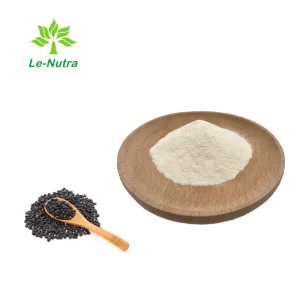
Our hydrolyzed potato proteins, soluble pea fractions, and hydrolyzed black bean peptides feature low isoelectric precipitation points. Formulators achieve completely clear or stable milky suspensions that withstand high-pressure pasteurization (HPP) and UHT thermal cycles without clotting or fouling heat exchangers.
Athletic performance powders and senior clinical nutrition rely on rapid leucine kinetics to activate the mTOR pathway for muscle protein synthesis. Typical unhydrolyzed vegetal sources absorb too slowly, blunting postprandial hyperaminoacidemia.
By enzymatically cleaving peptide chains into short di- and tri-peptides, our mung bean, soy, and potato isolates bypass standard gastric proteolysis via PepT1 transporters. This generates rapid leucine spikes comparable to dairy whey while eliminating lactose bloating, dairy sensitivities, and allergen labeling concerns.
Replicating the striated, fibrous texture of animal whole-muscle tissue requires plant proteins with specific denaturation temperatures, controlled disulfide bonding, and precise water-holding capacities.
Our high-viscosity vegetal protein isolates and customized soy fractions are designed for twin-screw extrusion barrels. They exhibit optimized elastic moduli (G') and thermal gelation properties, creating juicy, shear-resistant fiber matrices that mimic poultry, beef, and seafood without excessive hydrocolloid binders.
Plant protein hydrolysates are not limited to ingestible nutrition; small-molecule plant peptides deliver proven substantivity to human hair fibers and cutaneous keratin structures.
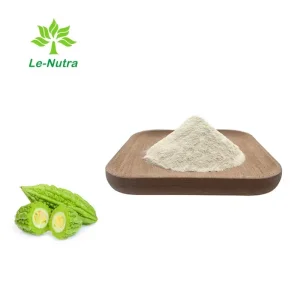
Our cosmetic-grade hydrolyzed potato protein, hydrolyzed bitter melon protein, and botanical oligopeptides penetrate cracked hair cuticles and damaged stratum corneum bilayers. They crosslink moisture within keratin fibrils, counteracting tensile stress caused by chemical bleaching and heat styling.
Full-Spectrum Contract Solutions: From Bench-Scale to Global Shelf
Accelerate your time-to-market with customized particle engineering, proprietary off-note neutralization, and comprehensive private-label toll blending.
Standard plant protein isolate powders are notorious for fine static dusting and poor wet-in rates, clumping into unhydrated balls when added to liquid.
Our factory utilizes fluid-bed agglomeration and non-GMO sunflower lecithin micro-coating to restructure particles into porous, free-flowing granules. This delivers true instantization: the powder dissolves smoothly into water in seconds with gentle spoon-stirring, eliminating the need for electric blenders.
The beany, grassy, or metallic notes often found in legumes stem from volatile hexanals and aldehydes produced by lipoxygenase enzymatic oxidation during milling.
Our proprietary green-processing deactivation system strips volatile off-notes under gentle vacuum stripping without synthetic flavor adulterants. The resulting plant proteins offer a genuinely neutral, clean base, allowing delicate flavors like vanilla, matcha, and berry to shine unimpeded.
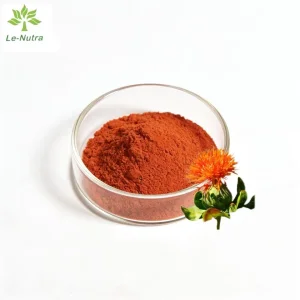
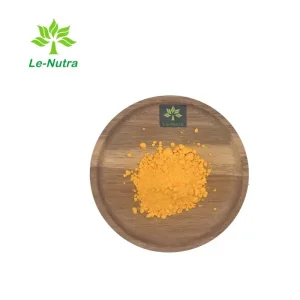
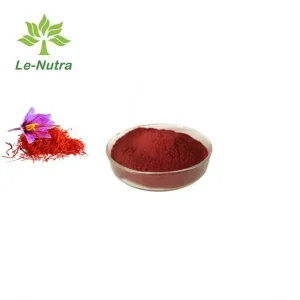
Beyond raw material export, we provide turnkey ODM/OEM contract manufacturing. We formulate custom synergistic blends combining plant proteins with nootropics like OEM pure L-theanine, natural apigenin, Coenzyme Q10, and standardized saffron extracts.
From drum-to-hopper ready bulk blending to retail-ready pre-packaged powder tubs, sachets, and stick-packs, our facilities deliver fully documented, market-ready finished SKUs with custom branding.
Global Procurement Criteria & Regulatory Compliance Matrix
How our analytical testing framework, cGMP documentation, and international certifications simplify supplier qualification for QA teams and procurement leaders worldwide.
Every commercial shipment includes batch-specific Certificates of Analysis (COA), safety data sheets (SDS/MSDS), non-GMO origin attestations, and allergen declarations. Our internal tracking binds agricultural farm gate data to the finished container.
QA directors receive full visibility into molecular weight distributions, Dumas combustion protein confirmation, and ash profiles prior to warehouse dispatch.
We run every production lot through Inductively Coupled Plasma Mass Spectrometry (ICP-MS) to guarantee elemental purity: Lead (Pb), Arsenic (As), Cadmium (Cd), and Mercury (Hg) meet strict California Prop 65 and European Commission thresholds.
Triple-quadrupole GC-MS/MS and LC-MS/MS screens guarantee non-detectable levels across more than 400 common agricultural pesticides and fungicides.
Our automated facilities operate under rigorous cGMP protocols and hold globally audited food safety and trade credentials. We support worldwide religious and ethical markets through ongoing Kosher and Halal compliance verifications.
Our verified EcoVadis sustainability rating gives multinational ESG committees verified assurance regarding water stewardship, energy efficiency, and fair labor practices throughout our manufacturing network.
Frequently Asked Technical Questions for Formulation & Sourcing Teams
Precise answers regarding molecular sizing, solubility kinetics, shelf-life validation, export logistics, and factory batch testing.
Intact isolates consist of complex, high-molecular-weight globular protein structures (> 50,000 Daltons) that require extensive mechanical shear and digestive breakdown, often exhibiting poor cold-water solubility. Enzymatically hydrolyzed proteins are cleaved by selected food-grade endo- and exo-proteases into small peptides (< 1,000 to 3,000 Daltons). This alters the isoelectric point, yields near-complete water solubility, enhances cellular uptake via PepT1 transporters, and minimizes gastric transit time.
Single plant proteins typically exhibit an incomplete essential amino acid profile. Legume proteins (such as pea, mung bean, and black bean) are rich in lysine and threonine but limited in sulfur-containing amino acids (methionine and cysteine). Cereal, tuber, and seed sources (such as rice, potato, and pumpkin seed) feature high methionine and cysteine with lower lysine. By systematically co-fractionating or dry-blending these complementary sources at precise stoichemetric ratios verified via HPLC amino acid assay, we engineer plant matrices that achieve a PDCAAS of 1.0 and a DIAAS above 1.15.
Agricultural botanicals naturally experience harvest-to-harvest variance due to rainfall, temperature, and soil conditions. We mitigate this through continuous automated multi-tank extraction, countercurrent de-flavoring, standardized enzyme-to-substrate ratios, and in-line spectrophotometric colorimetric tracking. Raw botanical lots are blended prior to processing to establish uniform raw material baselines, ensuring each batch fulfills narrow specification bands for bulk density, solubility index, and sensory neutrality.
We adhere to the world's most rigorous botanical pharmacopeia standards (USP, Ph. Eur., and California Proposition 65). Every lot undergoes closed-vessel microwave digestion followed by Inductively Coupled Plasma Mass Spectrometry (ICP-MS) analysis. Standard release thresholds are set at Lead (Pb) < 0.5 ppm (custom ultra-pure < 0.1 ppm), Arsenic (As) < 0.5 ppm, Cadmium (Cd) < 0.2 ppm, and Mercury (Hg) < 0.05 ppm. Specific customized batch thresholds can be contractually agreed upon in the Quality Agreement.
Yes. Standard intact plant proteins precipitate and coagulate heavily when exposed to pH levels between 3.5 and 5.0 (their natural isoelectric zone). Our custom-engineered hydrolyzed potato protein and specialized low-molecular pea peptide powders feature altered surface electrostatic charges that prevent coagulation in acidic media. Formulators can easily engineer shelf-stable, crystal-clear functional waters, energy drinks, and fruit juices with zero chalky mouthfeel and complete optical clarity.
Our standard bulk export packaging consists of 20 kg or 25 kg multi-wall food-grade kraft paper bags with an inner heat-sealed polyethylene moisture barrier, or 500 kg super-sacks for large industrial dry-blending facilities. Standard catalog MOQs start at 25 kg for sample pilot runs and 500 kg for custom formulations. Standard lead time for in-stock materials is 3 to 7 business days from Xi'an, and 14 to 21 days for custom toll enzymatic synthesis.
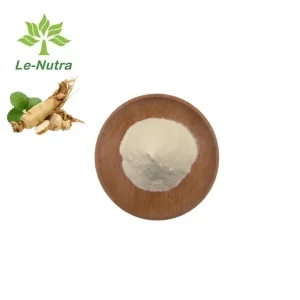
Featured Botanical Peptides, Health Actives & Cosmetic Ingredients
Discover small-molecule peptides, dietary supplement raw ingredients, and pure cosmetic building blocks supported by verified factory assays and batch COAs.
Accelerate Your Next Plant Protein Formulation
Connect directly with our senior process engineers and bio-manufacturing teams. Request custom mesh sizes, molecular weight fractionations, regulatory dossiers, or batch pilot samples shipped directly to your R&D laboratory.