Primary Bioactive & Functional Catalog
High-Efficiency Botanical Actives & Hydrolyzed Protein Matrices
Lab-verified, batch-traceable raw materials tailored for high-speed automated vegetarian capsule filling, continuous dissolution stability, and targeted gastrointestinal kinetics.
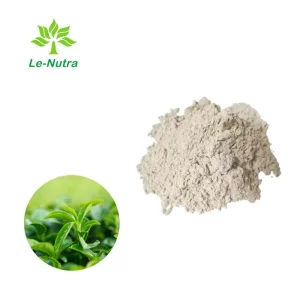
OEM OEM Vine Tea Extract Dihydromyricetin Powder in Natural Anti-Aging Products
View Product Specs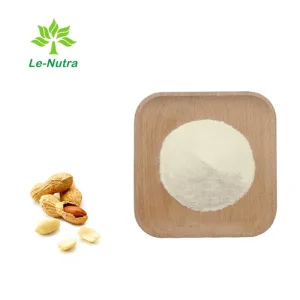
High-Quality High-Quality Hydrolyzed Peanut Protein for Personal Care Products
View Product Specs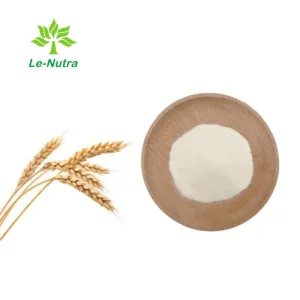
China Small Molecular Hydrolyzed Wheat Protein Powder for Personal Care Formulations
View Product Specs
Custom Bulk Cosmetic Raw Material 1,2-Pentanediol / Pentylene Glycol
View Product Specs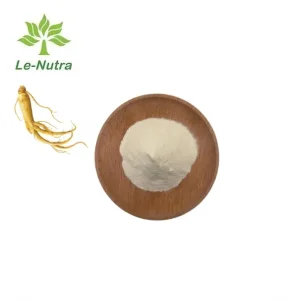
Buy Ginseng Peptide Powder for Dietary Encapsulation & Cellular Vitality
View Product Specs
Custom Natural Wheat Oligopeptide Powder for Plant-Based Nutraceutical Products
View Product Specs
Buy Lemon Balm Rosmarinic Acid Extract Powder for Cognitive Health Fillers
View Product Specs60,000 m²
Integrated cGMP Base
3,000 t/a
Total Extraction Capacity
40+
Direct Export Nations
< 0.05%
Shell Brittleness Index
1. Global Procurement Dynamics & The Vegetarian Capsule Paradigm Shift
The global pharmaceutical and functional nutrition encapsulation sector is undergoing a structural paradigm shift away from traditional bovine and porcine gelatin toward non-animal, cellulose- and polysaccharide-derived shell matrices. As consumer demand for Clean Label, Non-GMO, Halal, Kosher, and vegan certifications intensifies, OEM contract manufacturers and multinational brands face the imperative to secure continuous, high-purity inputs of vegetarian capsule raw materials.
Unlike animal gelatin, which is susceptible to cross-linking when exposed to aldehydes, polyphenolic herbal extracts, or elevated storage temperatures, modern vegetarian capsules utilize Hydroxypropyl Methylcellulose (HPMC / Hypromellose), Pullulan, and Modified Plant Starches. These materials provide chemically inert barrier characteristics, consistent moisture sorption isotherms, and reliable dissolution profiles across varying gastric pH ranges.
Procurement directors and formulation scientists must address multiple physicochemical variables when sourcing vegetarian capsule ingredients. These include dynamic viscosity during hot-melt dip-molding, film tensile elasticity, mechanical resilience on ultra-high-speed encapsulation machinery (e.g., Bosch, Qualicaps, IMA), and moisture-equilibrium retention when enclosing highly hygroscopic or oxidation-sensitive botanical extracts and peptide powders.
2. Macromolecular Solutions: Eliminating Cross-Linking & Moisture Instability
Vegetarian polymers solve primary technical vulnerabilities inherent to legacy animal protein encapsulation systems:
- Cross-Linking Resistance: Gelatin contains lysine residues that undergo internal cross-linking when formulated alongside reactive aldehydes, peroxides, or polyvalent botanical phenolics (such as green tea, curcumin, or vine tea extracts). This cross-linking results in the formation of insoluble pellicles that retard drug dissolution. In contrast, hypromellose polymers are ethers of cellulose containing no active amino acids, completely eliminating pellicle formation.
- Optimized Equilibrium Moisture Content: Traditional gelatin shells inherently carry 13% to 16% bound water. When filled with hygroscopic botanicals, plant proteins, or synthetic active ingredients (such as NAD+, pentylene glycol, or hydrolyzed peptides), gelatin transfers water into the formulation matrix, causing brittle shells, wall cracking, and active ingredient degradation. Vegetarian HPMC shells maintain a low equilibrium moisture content of 3.0% to 7.0%, preserving fill stability.
- Global Regulatory & Cultural Compatibility: Sourcing vegetarian capsule raw materials completely mitigates Bovine Spongiform Encephalopathy (BSE) and Transmissible Spongiform Encephalopathies (TSE) risks, ensuring effortless cross-border customs clearance across the United States FDA, European Union EMA, Japanese PMDA, and Middle Eastern SFDA frameworks.
Hypromellose (HPMC) Chemistry
Controlled methoxyl and hydroxypropoxyl substitution balances mechanical film tensile strength with rapid dissolution at 37°C in simulated gastric fluid.
Fermented Pullulan Bio-Matrices
Naturally fermented from Aureobasidium pullulans, this biopolymer yields an oxygen transmission rate 300 times lower than HPMC, ideal for oxidation-prone bio-actives.
Secondary Gelling Promoters
Precision-calibrated food-grade carrageenan, potassium chloride, and gellan gum networks enhance thermal gelling behavior without increasing shell brittleness.
Polymer Engineering Evaluation
Comparative Specification Matrix: Plant vs. Animal Capsule Shells
Comprehensive physicochemical, environmental, and mechanical performance parameters across commercial encapsulation matrices.
| Performance Metrics | HPMC (Cellulose Ether) | Natural Pullulan | Modified Plant Starch | Traditional Bovine Gelatin |
|---|---|---|---|---|
| Raw Material Origin | Pinewood / Cotton Cellulose | Aureobasidium Fermentation | Tapioca / Non-GMO Maize | Bovine / Porcine Hide & Bone |
| Equilibrium Water Content | 3.0% – 7.0% | 10.0% – 14.0% | 8.0% – 12.0% | 13.0% – 16.0% |
| Oxygen Permeability (OTR) | Moderate (Barrier Coating Avail.) | Ultra-Low (< 2.0 cc/m²·day) | Moderate to Low | Moderate (3.5 – 6.0 cc/m²·day) |
| Cross-Linking Susceptibility | Zero (Inert Polymer) | Zero (Polysaccharide) | Zero (Non-Protein) | Severe with Aldehydes/Tannins |
| Disintegration Time (USP <701>) | < 15 min (37°C ± 1°C) | < 12 min (37°C ± 1°C) | 15 – 25 min (pH Dependent) | < 10 min (Uncrosslinked) |
| Brittleness at Low RH (<20%) | Ductile & Non-Brittle | Slight Elastic Loss | Flexible | Highly Fragile / Cracking |
| Thermal Stability Window | Stable up to 60°C | Stable up to 50°C | Stable up to 65°C | Deforms & Melts > 35°C |
| Vegetarian & Clean Label | 100% Certified Vegan | 100% Certified Organic/Vegan | 100% Certified Vegan | Non-Vegetarian / Animal Origin |
Process Engineering & QC
End-to-End Continuous Manufacturing Workflow
From raw cellulose etherification to cryogenic micronization, our automated facility enforces tight tolerance controls across every production batch.
Stage 01: Alkylation
Purified wood pulp is alkalized and treated with methyl chloride and propylene oxide to establish uniform etherification degrees.
Stage 02: Neutralization
Multi-stage demineralization and counter-current washing remove residual by-products, ensuring low conductivity and low ash content (<1.0%).
Stage 03: Micronization
Cryogenic milling and aerodynamic classification standardize particle size distributions (80–120 mesh) for uniform dissolving kinetics.
Stage 04: HPLC Testing
Advanced chromatography, ICP-MS heavy metal validation, and microbial assays confirm strict compliance with USP, EP, and JP pharmacopeias.
Stage 05: Clean Export
Automated vacuum packaging in moisture-barrier bags with dry nitrogen flush prevents agglomeration during trans-oceanic container transit.
R&D Horizons & Future Outlook
Next-Generation Technology Roadmap: 2025–2032
Anticipating evolving consumer demands and regulatory standards with smart, responsive, and ultra-protective plant-based capsule systems.
2025 – 2026
Enteric Acid-Resistant HPMC Polymers
Developing intrinsic, acid-resistant cellulose matrices that bypass gastric acid (pH 1.2) without post-process chemical film coatings, protecting live probiotic cultures and sensitive enzymes.
2027 – 2028
Titanium Dioxide (TiO₂) Replacements
In response to EU ban restrictions on E171, our teams have developed high-opacity plant-derived mineral matrices utilizing calcium carbonate and rice starch for ultra-bright white capsule finishes.
2029 – 2030
Ultra-Low Moisture (<2%) Micro-Caps
Pioneering hydrophobic-modified pullulan variants for highly moisture-reactive peptides, unstable nucleotides (such as NAD+ and NMN), and lyophilized live biotherapeutic products (LBPs).
2031 – 2032
Carbon-Negative Polysaccharide Matrices
Closed-loop, microalgae-derived carbohydrate polymers engineered for zero carbon footprint, accelerated biodegradability, and elevated gas-barrier integrity.
Global Regulatory Assurance
Audited Manufacturing & Global Customs Clearance
Speeding time-to-market with complete documentation portfolios, Drug Master Files (DMF), and international sustainability certifications.
US FDA DMF Type IV
Active Drug Master Files (DMF) on record with the United States FDA, enabling streamlined reference for ANDA and NDA client drug applications.
Ph. Eur. / USP Compliant
Every commercial batch meets and exceeds European Pharmacopoeia and United States Pharmacopeia standards for residual solvents, heavy metals, and endotoxins.
EcoVadis Sustainability
Documented silver rating in corporate social responsibility, carbon footprint mitigation, responsible water recycling, and ethical botanical supply chain sourcing.
Halal & Kosher Certified
Annual audit certifications by accredited global religious compliance bodies, guaranteeing unadulterated non-animal origins for multi-region commercialization.
Technical Knowledge Base
Frequently Asked Questions for Formulation Engineers
In-depth insights into polymer compatibility, mechanical tolerances, filling speeds, and stability considerations.
How does HPMC eliminate capsule cross-linking with high-polyphenol botanical extracts?
Cross-linking in gelatin capsules occurs when reactive aldehydes or polyphenolic tannins react with amino functional groups (specifically lysine residues) on gelatin protein chains, creating irreversible covalent bonds that form a water-insoluble rubbery pellicle. Hypromellose (HPMC) is a non-ionic ether of cellulose containing only ether and hydroxyl functional groups. Without free amino groups, HPMC is chemically inert to polyphenols, aldehydes, and complex herbal matrices, ensuring uniform dissolution even after long-term accelerated stability storage.
What is the optimal equilibrium relative humidity (eRH) for vegetarian capsule storage?
HPMC capsules maintain their flexibility, mechanical impact strength, and dimensional tolerances within a wide humidity range of 35% to 65% RH at 15°C–25°C. Crucially, even when ambient humidity drops below 20% RH, HPMC retains sufficient structural moisture within its ether matrix to prevent the shell embrittlement and shattering commonly seen in gelatin capsules at equivalent dry conditions.
Can pullulan capsule ingredients be used for liquid or semi-solid lipid fills?
Yes. Pullulan exhibits excellent barrier properties against non-polar hydrophobic oils and lipid vehicles (such as medium-chain triglycerides, olive oil, and botanical essential oils). However, because pullulan is a hydrophilic polysaccharide, water-containing liquid formulations with water activity (aw) > 0.2 must be avoided, as they can plasticize and soften the capsule wall over time.
How do HPMC filling speeds on automated encapsulation machines compare to gelatin?
Modern HPMC formulations with optimized gelling agents (such as gellan gum or carrageenan) achieve dimensional uniformity and dome thickness comparable to pharmaceutical-grade gelatin. In high-speed commercial encapsulators (e.g., Bosch 1500/3000 series, Qualicaps, Harro Höfliger), modern HPMC runs smoothly at speeds exceeding 150,000 capsules/hour with mechanical fault rates lower than 0.05%.
What testing procedures confirm raw material compliance with USP <2040> and <701>?
All ingredient lots undergo simulated gastric fluid (0.1 N HCl, pH 1.2) and simulated intestinal fluid (phosphate buffer, pH 6.8) automated basket-rack assembly disintegration testing per USP <701>. For botanical dietary supplements, rupture and dissolution testing adhere strictly to USP <2040>, requiring 100% rupture within 15 minutes at 37°C ± 0.5°C.
Are custom colors, opacifiers, and TiO2-free formulations available for OEM export?
Yes. In alignment with European Commission Regulation (EU) 2022/63 banning titanium dioxide (TiO₂ / E171) in food supplements, we supply clean-label opacified matrices using high-purity calcium carbonate (E170), zinc oxide, and modified starches, alongside natural colorants such as sodium copper chlorophyllin, riboflavin, and iron oxides.
Specialized Actives & Encapsulation Nutrients
High-Purity Botanical Extracts, Peptides & Functional Active Powders
Specialized active ingredients engineered for high-density vegetarian encapsulation, clean flowability, and target bio-accessibility.
Wholesale Chamomile Extract Powder for Calming & Digestive Encapsulation
View Product Specs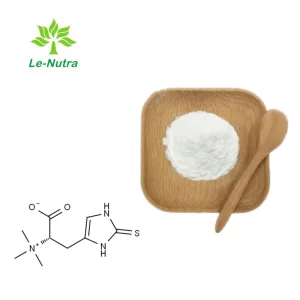
Custom High Concentration Ergothioneine Powder for Cellular Repair & Vitality
View Product Specs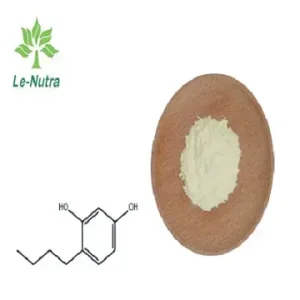
China Pure 4-Butylresorcinol Powder for Precision Dermatological Formulation
View Product Specs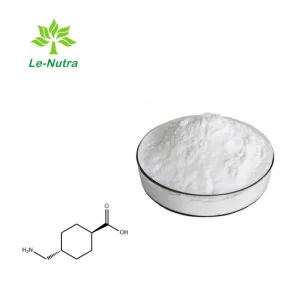
High-Quality Premium Tranexamic Acid Powder with Antioxidant Support
View Product Specs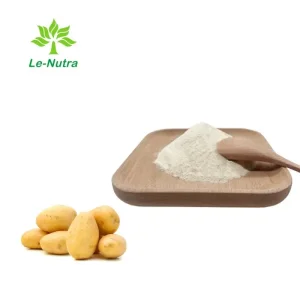
ODM Cosmetic Grade Hydrolyzed Potato Protein for Clean-Label Personal Care
View Product Specs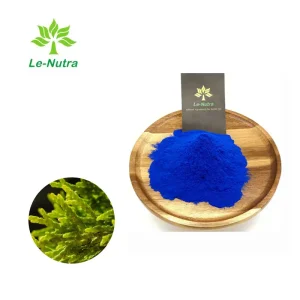
China Natural Food Coloring Phycocyanin Powder for Clean Label Capsule Tinting
View Product Specs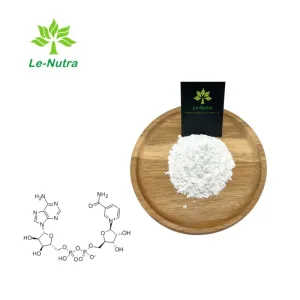
Custom Premium NAD Powder for Health Supplements & Cellular Metabolism
View Product Specs
China Functional Indole-3-Carbinol Powder for Health Supplement Encapsulation
View Product Specs
Technical Inquiries & Qualification Support
Request Formulation Dossiers, DMF References & Evaluation Samples
Connect directly with our applications engineering group. Receive full batch Certificates of Analysis (COA), Safety Data Sheets (SDS), technical specification sheets, and tailored polymer recommendations for your high-speed encapsulation machinery.