Factory Direct Bio-Active Ingredients & Speciality Peptides
Lab-verified, batch-traceable compounds engineered for functional foods, performance shakes, and cosmeceutical applications.
Global Plant-Based Protein Market Dynamics & Price Drivers
The transition toward sustainable non-animal macronutrients has accelerated past conventional consumer trends into a fundamental industrial raw material pivot. Global demand for high-purity plant protein isolates—notably derived from yellow peas (Pisum sativum), brown rice, fava beans, and pumpkin seeds—is forecasted to exceed USD 21.5 billion by 2030, charting an 8.9% CAGR. However, international procurement directors face unprecedented volatility in pricing structures. Raw harvest yields, wet-milling energy tariffs, decarbonization mandates, and ocean freight flux make transparent Original Design Manufacturer (ODM) contract packaging and direct factory quotation crucial for commercial margins.
Contract manufacturing facilities across Europe and North America often struggle with upstream input spikes. In contrast, fully integrated Chinese processing plants operating multi-stage mechanical fractionation and bio-enzymatic refining offer a hedge against raw material volatility. This comprehensive evaluation breaks down the operational parameters, supply chain resilience, and precise quotes of the Top 10 Plant-Based Protein Powder formulations manufactured for international distribution.
The Top 10 Plant-Based Protein Isolates: Engineering Profiles
Functional analysis, PDCAAS rating, sensory neutralization, and indicative FOB contract pricing.
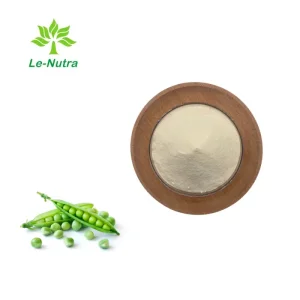
Pea Protein Isolate (80%-85%)
Clean extraction from non-GMO yellow peas. Excellent BCAA profile (leucine, isoleucine, valine). PDCAAS: 0.78-0.82. FOB Quote: $2,850 - $3,450 / MT.
Fava Bean Protein (85% Clean Label)
High emulsification stability, pale hue, and ultra-neutral flavor. Low vicine and convicine content. FOB Quote: $3,600 - $4,200 / MT.
Organic Brown Rice Protein (80%)
Enzymatically digested, hypo-allergenic profile rich in sulfur-containing amino acids (methionine/cysteine). FOB Quote: $2,400 - $2,950 / MT.
Pumpkin Seed Protein (65%-70%)
Cold-pressed mechanically degreased powder loaded with magnesium, zinc, and arginine. Deep natural green hue. FOB Quote: $4,100 - $4,800 / MT.
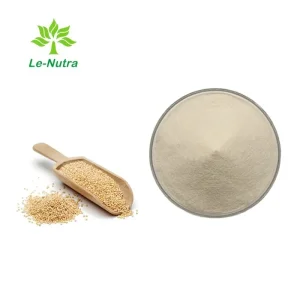
Hydrolyzed Quinoa Protein
Complete amino acid profile containing all 9 essential amino acids; bio-active peptide chains under 2,000 Da. FOB Quote: $6,500 - $7,800 / MT.
Hemp Seed Protein Isolate (70%)
Rich in edestin and albumin storage proteins. Balanced Omega 3-6-9 fatty acid retention. Cold-milled. FOB Quote: $3,900 - $4,500 / MT.
Hydrolyzed Oat Protein (60%)
Thermally stable, exceptional water hydration capacity and beta-glucan synergy for ready-to-drink (RTD) mixes. FOB Quote: $3,100 - $3,700 / MT.
Soy Protein Isolate (90% Non-GMO)
Gold-standard PDCAAS of 1.00. Superior gel-forming capability, structural viscosity, and cross-linking strength. FOB Quote: $2,100 - $2,600 / MT.
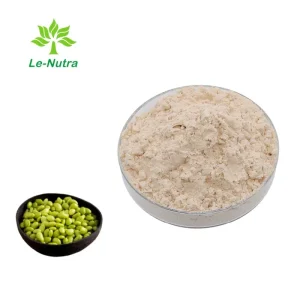
Mung Bean Protein Isolate (80%)
Remarkable foaming properties and gelation threshold, ideal for plant-based egg analogs and RTD clinical nutrition. FOB Quote: $4,900 - $5,600 / MT.
Sunflower Seed Protein (60%)
Defatted cake upcycling; polyphenol-optimized extraction preventing chlorogenic acid green oxidation. FOB Quote: $3,200 - $3,800 / MT.
End-to-End Raw Material Upstream
Operating a 60,000 m² advanced manufacturing facility in Xi'an gives Le-Nutra unhindered geographical access to strategic agricultural zones across Shaanxi, Gansu, and Heilongjiang. By contracting dedicated acreage for non-GMO legumes and cereals, the facility insulates overseas brand partners from global grain speculation and broker margins.
In-line testing guarantees that arriving harvests adhere to strict limit bounds for heavy metals (Lead ≤0.2 ppm, Cadmium ≤0.1 ppm) and pesticide residues before feeding into automated pneumatic grain-cleaning separators.
Scale Economy & Six Extraction Lines
With an annual output exceeding 3,000 metric tons distributed over six dedicated multi-functional lines, the plant utilizes closed-loop membrane filtration, ultrafiltration, and low-temperature spray-drying towers. This high-throughput model reduces per-kilogram thermal energy consumption by 28% compared to European decentralized milling houses.
Continuous automation minimizes human contact, maintaining cleanroom ambient conditions (ISO Class 8 / GMP standard) across all blending, air-classification, and vacuum packaging steps.
Expedited Global Logistics Hubs
Located near core railway intermodal nodes and maritime container terminals (Qingdao, Tianjin, and Shanghai ports), shipments are moved under verified cold-chain or climate-controlled bill of ladings. Integrated export clearance customs documents (Phytosanitary Certificates, Health Attestations, Certificate of Origin) are issued in under 48 hours.
This streamlined pipeline guarantees a consistent 14-to-21 day transit cycle to North American West Coast and primary European hubs (Rotterdam/Hamburg).
Localized Formulation Archetypes: Regulatory & Consumer Taste Adaptation
A frequent pitfall for international brands is attempting to market identical plant protein powders across distinct territorial jurisdictions. Consumer palate tolerance, sensory bitterness thresholds, dispersion viscosity, and food additive legislations vary sharply between regional trade corridors:
US Sports Nutrition & Keto
Emphasis is placed on fast hydration, high leucine ratios (>2.5g per serving for mTOR pathway activation), and zero added sugar. Formulations require 100-mesh ultrafine particle sizing to eliminate gritty throat feel in water shakers without synthetic hydrocolloid thickeners.
EU Clean-Label & Organics
Compliance with EFSA novel food thresholds and strict zero-tolerance for cross-contamination of unlisted allergens. Demands cold-mechanical processing over harsh chemical solvent precipitations, requiring certified Organic and non-GMO project validation with transparent supply tracing.
APAC Functional RTD & Elderly Care
Focused on rapid stomach emptying, non-bloating profiles, and gentle gut transit. Blends leverage small-molecule hydrolyzed pea or rice peptides (<1000 Da) combined with herbal extracts (e.g., Cordyceps, Milk Thistle) for clinical metabolic nutrition.
Analytical Chemistry, Batch Traceability & QA Protocols
Stringent compliance dossiers verifying non-GMO origin, low pesticide thresholds, and microbiological clearance.
Assay Verification
Kjeldahl nitrogen quantification method (N × 6.25) performed on every production lot to guarantee stated protein concentration meets specification.
Heavy Metal ICP-MS
Inductively Coupled Plasma Mass Spectrometry screening for Lead, Arsenic, Cadmium, and Mercury strictly calibrated to California Prop 65 limits.
Microbial Clearance
Total Plate Count <10,000 cfu/g, Yeast & Mold <100 cfu/g, negative tests for Salmonella, E. coli, and Staphylococcus aureus in 25g sample masses.
Regulatory Packets
Complete audit packets furnished: Batch COA, English MSDS/SDS, Kosher & Halal certificates, Allergen Statements, and Non-Irradiation declarations.
Frequently Asked Questions on Plant-Based Protein ODM & Bulk Purchasing
Key information regarding minimum order quantities, private labeling, lead times, and sensory modification.
What is the Minimum Order Quantity (MOQ) for custom ODM protein formulations?
How does Le-Nutra handle the typical earthy "beany" off-notes in legume proteins?
Can your factory match specific mesh sizes for Ready-To-Drink (RTD) beverage formulations?
What validation documentation is supplied prior to export dispatch?
What is the expected production lead time and typical ocean transit window?
Specialty Protein Concentrates, Extracts & Purified Actives
Explore high-value nutritional raw materials ready for immediate formulation integration and commercial volume quotation.