High-Purity Bio-Active & Hydrolysate Compounds
Explore our foundational range of clean-science active ingredients and botanical extractions certified under strict GMP standards.
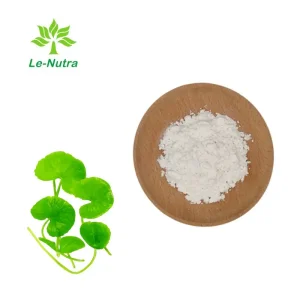
High-Quality Natural Wholesale Cosmetics Centella Asiatica Extract
View Product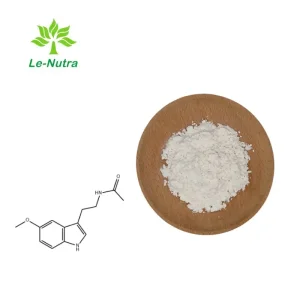
China Natural Supplement Melatonin Powder for Sleep Support
View Product
OEM Cholesterol Cosmetic Ingredient Manufacturers, Exporters
View Product
OEM Allantoin Powder Suppliers, Factory
View Product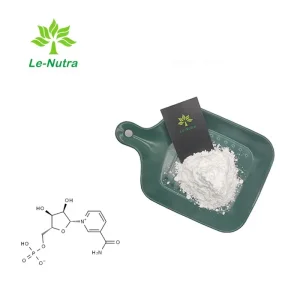
Wholesale NAD+ Precursor Beta Nicotinamide Mononucleotide NMN Powder
View Product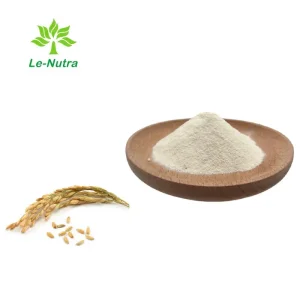
Custom Natural Wheat Oligopeptide Powder for Plant-Based Products
View Product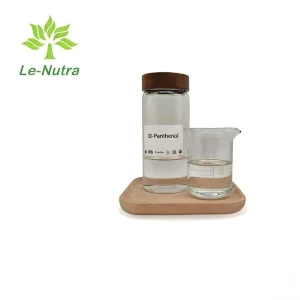
High-Quality D Panthenol Factories, Pricelist
View Product
ODM Pure Squalane Liquid Suppliers, Exporters
View ProductGlobal Landscape of Amino Acid & Protein Hydrolysate Processing
A transition from crude macromolecular proteins to site-specific enzymatically cleavable amino acid complexes.
In modern industrial biotechnology, the global market for amino acid protein hydrolysates is experiencing a fundamental structural shift. Historically, industrial hydrolysates were dominated by crude, non-selective acid-hydrolyzed vegetal proteins (HVP) designed primarily for basic flavor enhancement or animal feed. However, the contemporary high-purity biopharmaceutical, personal care, and specialized medical nutrition markets demand precision-targeted biocatalytic cleavage. By executing tightly managed enzymatic hydrolysis on isolated vegetal and marine protein substrates (such as soy, wheat, pea, corn, walnut, and marine collagen), modern manufacturing facilities generate tailored fractions of oligopeptides, dipeptides, tripeptides, and free amino acids possessing predetermined functional properties.
The global amino acid hydrolysate market is anticipated to expand at a compound annual growth rate (CAGR) exceeding 7.4% through 2032, pushed vigorously by clean-label food trends, sports performance biochemistry, and hypoallergenic clinical nutritional matrices. As multinational brand owners migrate away from animal-derived serum albumin and bovine hydrolysates due to carbon footprints and allergen liabilities, vegetal-based protein hydrolysates with low molecular weights (<1,000 Daltons) have emerged as the primary standard for bioavailability, cellular uptake, and hypoallergenicity.
Xi'an Le-Nutra Ingredients Inc., operating across a modernized 60,000 m² industrial facility equipped with 6 specialized extraction and biocatalysis processing lines, stands at the confluence of this technological leap. With an annual capacity reaching 3,000 metric tons, the facility resolves the critical macro bottleneck that has long troubled formulation engineers: achieving consistent batch-to-batch biocatalytic cleavage while controlling bitter hydrophobic peptide fractions and retaining clear aqueous solubility across wide pH ranges.
Clean-Label Vegan Nutrition
Rapid substitution of milk, whey, and egg proteins with plant-based hydrolysates (pea, wheat, black bean) that deliver comprehensive amino acid profiles without gastrointestinal distress or common allergen triggers.
Cosmeceutical Anti-Aging
Direct skin penetration is biologically impossible for native proteins over 5,000 Da. Precision enzymatic hydrolysis isolates micro-peptides (<500 Da) capable of traversing the stratum corneum to stimulate fibroblasts and enhance collagen matrix integrity.
Medical Enteral Formulations
In post-operative, oncology, and infant nutrition sectors, intact proteins place excessive metabolic stress on compromised digestive tracts. Fully predigested amino acid hydrolysates facilitate direct jejunal absorption via peptide transporter 1 (PEPT1).
Targeted Biostimulant Efficacy
Beyond human ingestion, high-purity L-amino acid hydrolysate matrices serve as bioavailable chelators and abiotic stress alleviators in precision agrochemical applications across Europe, the Americas, and APAC.
Enzymatic Cleavage Engineering & Molecular Weight Fractionation
A rigorous manufacturing roadmap: how Le-Nutra manipulates peptide bond cleavage to produce functional hydrolysate architectures.
The manufacturing architecture at Xi'an Le-Nutra Ingredients Inc. bypasses the obsolete chemical acid-base digestion routes, relying instead upon multi-stage biocatalytic enzymatic reactors. Intact proteins are dense tertiary and quaternary polymer structures connected by covalent peptide linkages. Breaking these bonds through non-selective strong acids (such as hydrochloric acid) destroys sensitive amino acids (including tryptophan, cystine, and methionine) while introducing chlorohydrins and excessive inorganic ash content.
Our technological roadmap utilizes an integrated cascading scheme: Sequential Endo- and Exo-peptidase Cleavage → Membrane Ultrafiltration → Decoloration & Debittering Chromatography → Low-Temperature Spray Drying.
| Fraction Range | Predominant Structure | Target Dalton Range (Da) | Functional Mechanism | Primary Commercial Use |
|---|---|---|---|---|
| Oligopeptide Grade | Short-chain oligomers (4–8 amino acids) | 1,000 – 3,000 Da | Film-forming, moisture retention, surface active foaming | Hair conditioning, texturized food emulsions |
| Micro-Peptide Active | Di- and tri-peptides (e.g., Gly-Pro-Hyp) | 500 – 1,000 Da | Direct dermal permeation, intracellular receptor trigger | Cosmeceutical repair serums, anti-wrinkle lotions |
| Free Amino Acid Matrix | Monomeric L-amino acids + dipeptides | < 500 Da | Instant osmotic balance, cellular assimilation without digestion | Clinical enteral nutrition, electrolyte sports gels |
| Standard Hydrolysate | Broad hydrolytic peptide spectrum | 500 – 5,000 Da (Gaussian) | Nutritional nitrogen supplementation, high dispersibility | Plant protein shakes, functional RTD beverages |
Substrate Preparation
Thermal denaturation relaxes tertiary protein globules, exposing specific cleavage sites to enzymatic active pockets.
Biocatalytic Cleavage
Endo-proteases (Alcalase, Papain) cut interior chains, followed by exo-peptidases for controlled Degree of Hydrolysis (DH).
Membrane Fractionation
Cross-flow ceramic ultrafiltration (MWCO 1kDa/3kDa/5kDa) sieves precisely defined molecular weight windows.
Debittering Adsorption
Macroporous resin chromatography isolates and eliminates hydrophobic terminal peptides causing sensory astringency.
Spray Drying & QC
Low-temperature micro-atomization yields non-caking, instant-dispersing powders with moisture <5% and COA release.
Localized Applications & Macro-Engineering Solutions
Overcoming solubility, sensory bitterness, and formulation stability hurdles across global consumer markets.
Industrial product development teams frequently encounter three severe roadblocks when formulating with protein hydrolysates: bitterness generated by exposed hydrophobic amino acids (Leucine, Isoleucine, Phenylalanine), high hygroscopicity leading to powder caking, and instability in acidic aqueous matrices. Xi'an Le-Nutra Ingredients Inc. acts not merely as a generic toll-processor, but as a manufacturing partner delivering targeted biochemical resolutions:
Cosmetics: Cuticle Rebuilding
Challenge: Synthetic silicones face strict microplastic regulatory bans under EU REACH.
Solution: Le-Nutra’s Hydrolyzed Wheat and Soy Proteins adhere ionically to damaged, negatively charged hair keratin fibers, rebuilding tensile strength and creating a bio-protective sheath with 100% biodegradability.
Ready-to-Drink (RTD) Clarity
Challenge: Native plant proteins precipitate when the beverage pH drops near their isoelectric point (pH 4.0–4.8).
Solution: Controlling the Degree of Hydrolysis past 15% completely breaks the isoelectric threshold, allowing pea and rice peptide solutions to remain transparent, sediment-free, and stable for 12+ months shelf life.
Sensory Taste Masking
Challenge: High DH hydrolysates inherently exhibit a sharp, lingering bitter peptide flavor profile.
Solution: Le-Nutra integrates proprietary exopeptidase polishing enzymes (Flavourzyme) combined with food-grade polymeric adsorbent resins, eliminating bitterness without requiring synthetic masking agents.
Hypoallergenic Validation
Challenge: Strict global labelling laws require zero immunological cross-reactivity for sensitive demographics.
Solution: By fractionating protein hydrolysates to molecular dimensions below the threshold required for IgE epitope cross-linking, our facilities deliver validated hypoallergenic bases for infant and geriatric nutritional systems.
Xi'an Le-Nutra: Clean-Science Manufacturing Powerhouse
14+ years of industrial extraction, GMP compliance, and high-precision testing workflows.
Founded on the principles of science-driven modernization and rigorous quality engineering, Xi'an Le-Nutra Ingredients Inc. operates an advanced 60,000 square meter industrial campus in Shaanxi, China. Designed specifically to service the stringent requirements of Fortune 500 chemical, cosmetic, and nutritional enterprises—including validated past and ongoing supply collaborations with firms such as BASF, DSM, 3SBio, Abbott, and Estée Lauder—our production capabilities guarantee total transparency and uncompromised supply continuity.
The facility features six fully integrated multi-tank extraction lines engineered with sanitary food- and pharma-grade 316L stainless steel. Automated PLC closed loops oversee every variable: enzymatic fluid velocity, substrate concentration, enzyme-to-substrate ratio, temperature regulation (±0.5°C), and reaction termination via precision flash pasteurization. Our downstream facilities incorporate low-temperature climbing-film evaporators and multi-stage sanitary spray drying chambers, ensuring heat-sensitive amino acids undergo zero thermal degradation.
Quality assurance is backed by our internal analytical testing laboratory, featuring High-Performance Liquid Chromatography (HPLC) coupled with Diode Array and Evaporative Light Scattering Detectors (HPLC-DAD/ELSD), Gas Chromatography-Mass Spectrometry (GC-MS), Inductively Coupled Plasma Mass Spectrometry (ICP-MS) for heavy metal quantification (<0.1 ppm limits), and continuous micro-biological testing. Every production batch is certified with complete Certificate of Analysis (COA), Safety Data Sheets (SDS), Non-GMO, Allergen, Halal, Kosher, and EcoVadis sustainability documentation.
Amino Acid Protein Hydrolysate Technical Inquiries
Critical specifications, customization options, and regulatory answers for procurement and R&D directors.
What is the difference between free amino acids, peptides, and protein hydrolysates?
A protein hydrolysate is the overarching term for a protein matrix that has been cleaved into fragments. Peptides represent short chains of amino acids (typically 2 to 20 residues, molecular weight <2,000 Da). Free amino acids are individual monomeric building blocks (<200 Da). Le-Nutra customizes the Degree of Hydrolysis (DH) to deliver exact ratios of free amino acids versus oligopeptides depending on whether your product demands rapid biological cellular assimilation or functional surfactant/film-forming properties.
How does Le-Nutra control batch-to-batch Molecular Weight Distribution (MWD)?
We utilize Gel Permeation Chromatography (GPC) coupled with HPLC to calibrate and verify the molecular weight profile of every batch against certified reference standards. During production, continuous monitoring of osmometer readings and pH-stat automated titration precisely dictates the exact minute enzymatic digestion is inactivated by thermal flash treatment, preventing over-cleavage or under-cleavage.
Can you manufacture customized plant hydrolysates for vegan-certified brands?
Yes. We offer fully plant-derived, non-GMO vegetal hydrolysate sources including yellow pea (Pisum sativum), non-GMO soy, wheat, brown rice, pumpkin seed, and black bean. Our production facility is registered for vegetarian and vegan compliance, containing dedicated lines to eliminate cross-contact with animal or marine sources.
What documentation accompanies every commercial export order?
Every commercial consignment includes a comprehensive batch Certificate of Analysis (COA) specifying total nitrogen, peptide content, assay, moisture, ash, heavy metals (Pb, As, Cd, Hg), and microbial limits (TPC, Yeast & Mold, E. coli, Salmonella). Furthermore, we supply full English-language Safety Data Sheets (SDS), Technical Data Sheets (TDS), allergen checklists, non-irradiated declarations, and country of origin certifications.
What are your standard Minimum Order Quantities (MOQ) and production lead times?
For standard catalog items maintained in inventory, our MOQ begins at 25 kg. For custom-tailored enzymatic specs (specific DH, bespoke mesh sizes, specialized debittering, or proprietary raw substrates), custom production campaigns typically require a 500 kg to 1,000 kg run. Typical production and QC release lead time for custom batches is 2 to 3 weeks from receipt of purchase order.
How are sensory defects such as off-odors and bitterness eliminated?
Hydrophobic amino acids (such as Leucine and Proline) located inside intact proteins often end up exposed after enzymatic cleavage, triggering bitter taste receptors. We solve this through proprietary enzymatic debittering (exopeptidase treatment that cleaves terminal hydrophobic residues) followed by optional passage through polymeric adsorbent chromatography beds, yielding a neutral, low-flavor profile suitable for unflavored formulations.
Precision Bio-Actives & Functional Peptide Powders
Explore specialized cosmetic actives, bio-fermented enzymes, and plant peptide fractions produced for global formulation demands.
Buy Acetyl Octapeptide-3 Powder Quotes, Pricelist
View Product
Wholesale Natural Hydrolyzed Black Bean Protein Powder
View Product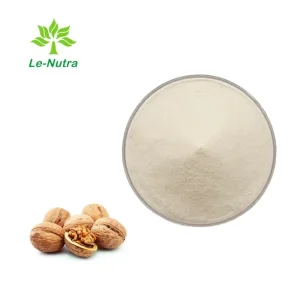
ODM All Natural Cosmetic Grade Hydrolyzed Walnut Protein Powder
View Product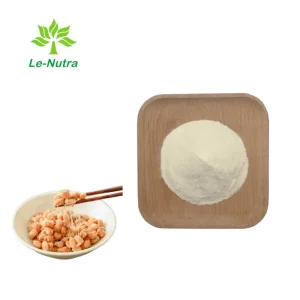
ODM High Quality Nattokinase Powder for Supplements
View Product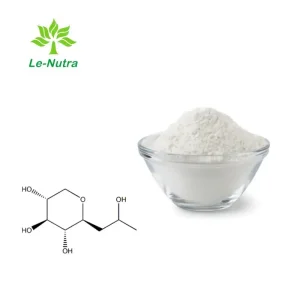
Wholesale Innovative Pure Pro-xylane Formula for Anti-Aging
View Product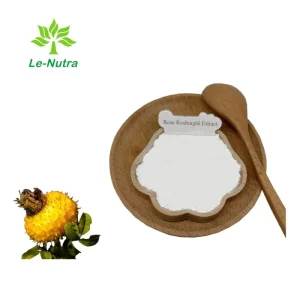
High-Quality Hot Sell Rosa Roxburghii Extract For Healthcare
View Product
Buy Premium Soybean Peptide Powder for Cosmetics Exporter
View Product