
Standardized botanical extracts and functional hydrolysates engineered for maximum kinetic stability and strict quality audit compliance.
Global Commercial & Industrial Status of Rosemary Antioxidant Extract
The global industrial transition from synthetic preservatives to botanical lipid-stabilizing agents has catapulted Rosemary Antioxidant Extract (Rosmarinus officinalis L.) to the forefront of clean-label manufacturing architecture.
In the contemporary macro-chemical landscape, regulatory tightening by the European Food Safety Authority (EFSA under additive designation E392) and the United States Food and Drug Administration (FDA GRAS status) has systematically phased out synthetic antioxidants such as Butylated Hydroxyanisole (BHA), Butylated Hydroxytoluene (BHT), and Tertiary Butylhydroquinone (TBHQ). These synthetic compounds, historically ubiquitous in lipid-heavy matrix formulations, face intense scrutiny regarding potential long-term cellular toxicity and carcinogenic metabolites. Consequently, global market demand for standardized rosemary extract is projected to reach $2.4 Billion USD by 2032, expanding at a compound annual growth rate (CAGR) of 7.8%.
Key Sourcing Insight: Rosemary Antioxidant Extract is not a singular molecule but a synergistic phytochemical complex. B2B procurement strategies must differentiate between lipophilic diterpenes (Carnosic Acid & Carnosol) for oil/fat matrices and hydrophilic phenolic acids (Rosmarinic Acid) for aqueous/emulsion systems.
Phytochemical Architecture: Carnosic Acid vs. Rosmarinic Acid
Understanding the molecular kinetics of Rosmarinus officinalis active compounds allows chemical formulators to achieve maximum induction periods during accelerated oxidation testing (Rancimat / Oxidative Stability Index).
Carnosic Acid (Lipophilic)
Carnosic Acid (C₂₀H₂₈O₄) is a phenolic diterpene synthesized within the glandular trichomes of rosemary leaves. It acts as an exceptionally potent primary antioxidant through a cascade mechanism: upon quenching free peroxyl radicals ($ROO^\bullet$), it converts into Carnosol and secondary quinone derivatives, continuing to exhibit radical-scavenging activity across elevated temperatures up to 210°C.
Primary Applications: Edible oils, lard, fish oil, meat emulsions, pet kibble fat coatings, and anhydrous cosmetic oils.
Rosmarinic Acid (Hydrophilic)
Rosmarinic Acid (C₁₈H₁₆O₈) is an ester of caffeic acid and 3,4-dihydroxyphenyllactic acid. Unlike Carnosic acid, Rosmarinic Acid possesses high water solubility and superior metal-chelating ability ($Fe^{2+}, Cu^{2+}$), preventing Fenton-reaction-induced lipid peroxidation in multiphase emulsions.
Primary Applications: Functional beverages, cosmetic serums, aqueous skin creams, salad dressings, and dietary supplements.
| Preservative / Active Compound | Origin / Source | Oxidative Cascade Quenching | Thermal Stability (°C) | Clean Label & Regulatory Status |
|---|---|---|---|---|
| Carnosic Acid (Rosemary Extract) | Natural Botanical | Yes (Multi-stage degradation quenching) | Up to 210°C | GRAS, E392 Approved, Clean Label |
| Rosmarinic Acid (Rosemary Extract) | Natural Botanical | Yes (Hydrophilic Radical + Metal Chelation) | Up to 160°C | GRAS, Global Cosmetic INCI Listed |
| BHT / BHA (Synthetic) | Petrochemical Synthetic | No (Single-step quenching) | Volatility issues >140°C | Phase-out in EU/US; Consumer Resistance |
| Mixed Tocopherols (Vitamin E) | Plant Seed Oil / Soy | Moderate (Pro-oxidant effect at high dose) | Up to 160°C | Natural, but higher unit cost & allergen risks |
Extraction Technology Roadmap & Industrial Manufacturing Architecture
As a dedicated B2B factory and global exporter, our processing facility utilizes advanced green extraction parameters to yield high-purity, low-odor, and low-color extracts suited for sensitive matrices.
1. Supercritical CO₂ Fluid Extraction ($sCO_2$)
Operating at pressures between 25–30 MPa and mild temperatures (35–45°C), supercritical $CO_2$ extraction isolates lipophilic carnosic acid without solvent residues or thermal degradation. Ideal for organic-certified food and cosmetic formulations demanding zero chemical solvent traces.
2. Advanced Deodorization & Decolorization
Native rosemary extract contains volatile essential oils (eucalyptol, camphor, alpha-pinene) and chlorophyll, imparting strong herbal pine notes and dark green discoloration. Our proprietary molecular distillation removes aromatic terpenes down to <20 ppm and eliminates chlorophyll, producing a neutral-flavor, light-tan powder.
3. High-Performance Liquid Chromatography (HPLC) Standardization
Every commercial production lot undergoes internal and third-party HPLC analysis to guarantee strict active titrations: Carnosic Acid (5% to 95% oil/powder), Rosmarinic Acid (5% to 98% water-soluble powder), and Carnosol. Fully documented with COA, MSDS, ISO22000, and Kosher certifications.
Macro Industry Solutions & Localized Application Scenarios
Customized active standardization profiles engineered to resolve specific oxidative degradation vectors across multi-industry supply chains.
Meat, Poultry & Seafood Processing
Challenge: WOF (Warmed-Over Flavor) caused by oxymyoglobin oxidation and rapid rancidity of polyunsaturated fatty acids during cold storage.
Solution: Deodorized Carnosic Acid (Liquid oil or powder dispersion) added at 150–300 ppm. Retains meat red pigment (oxymyoglobin stability) and reduces hexanal formation by up to 85% without altering sensory profiles.
Pet Food & Animal Nutrition
Challenge: Oxidation of rendered poultry fats, fish meal, and kibble oil spray systems causing vitamin loss and feed rejection.
Solution: High-concentration Carnosic Acid oil slurry blends mixed into render lines. Replaces ethoxyquin and BHT, extending product shelf life up to 18–24 months under ambient storage.
Cosmetics & Personal Care (Anti-Aging Active)
Challenge: UV-induced singlet oxygen generation, lipid peroxidation of facial oils, and collagen glycation in anti-aging formulas.
Solution: Standardized Rosmarinic Acid 90% (water soluble) or Carnosic Acid 95% (oil soluble). Acts as a potent cellular ROS scavenger, soothing cutaneous inflammation and protecting cosmetic emulsifiers from rancidity.
Edible Oils, Frying Fats & Bakery Products
Challenge: Thermal breakdown and free radical polymerization during high-temperature deep frying and commercial baking.
Solution: Thermally stable Carnosic Acid (10% liquid in sunflower/triglyceride carrier). Extends oil frying life cycles, prevents smoke-point drop, and minimizes polar compounds formation.
Technical FAQ & Global Procurement Guide
Expert answers to common engineering, formulation, and supply chain questions encountered by procurement managers and R&D chemists.
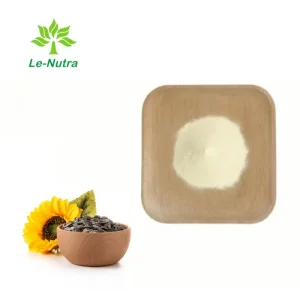
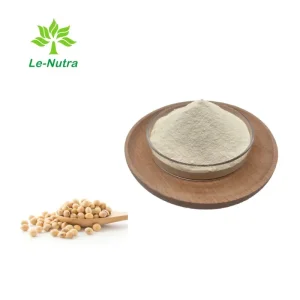
Explore our expanded range of clean-science plant proteins, bio-active oligopeptides, and botanical actives manufactured under strict GMP compliance.
Accelerate Your Formulations with Direct Factory Bulk Sourcing
Partner with Xi'an Le-Nutra Ingredients Inc. to access batch-certified Rosemary Antioxidant Extracts, standardized plant proteins, and custom bio-active peptide synthesis.