Sourcing Catalog I
Precision Actives & Cosmetic Formulation Intermediates
Lab-grade raw ingredients and active precursors designed to stabilize complex lipid-aqueous matrix formulations in scalable contract manufacturing.
Market Dynamics
Global Enterprise Sourcing Architecture for Retinol & Niacinamide Co-Formulations
Analyzing cross-category demand patterns, consumer tolerance expectations, and supply chain economies of scale across key beauty manufacturing hubs.
The Synergistic Paradox: Why Global Brands Must Buy Together
Cosmeceutical formulators across North America, the European Union, and Asia-Pacific are increasingly standardizing on the simultaneous procurement of Retinol (Vitamin A derivative) and Niacinamide (Vitamin B3 / Nicotinamide). While Retinol remains the clinical gold standard for cell turnover acceleration, fibroblast stimulation, and extracellular matrix synthesis, its notorious susceptibility to photodegradation and induction of retinoid-induced epidermal dermatitis has historically limited consumer retention.
The industrial solution rests in purchasing these ingredients in coordinated purity grades directly from verified manufacturers. Niacinamide functions as an essential biochemical buffer: by replenishing skin ceramides, boosting intercellular lipid lamellae, and dampening inflammatory cytokine cascades, it mitigates the disruptive barrier irritation triggered by free retinol. Brand procurement teams purchasing these dual actives unlock superior stability ratios, unified CoA testing parameters, and lower aggregate logistics overhead.
"Simultaneous procurement of bulk stabilized retinol and high-purity niacinamide enables contract factories to optimize dual-encapsulation emulsions while guaranteeing residual free nicotinic acid levels below 100 ppm."
Coordinated Batch Qualification
Procuring dual actives from an integrated factory avoids analytical discrepancies in heavy metal assays, residual volatile solvents, and microbial threshold checks, speeding time-to-market by up to 45% during clinical QA audits.
Thermodynamic Balancing in Large Batches
Retinol degrades exponentially in polar aquatic phases, whereas Niacinamide is naturally hydrophilic. Modern OEM factories must execute precise dual-phase emulsification schemes, requiring raw material specs tailored for polyglyceryl lipid systems.
Technical Roadmap
Engineering Solutions for Retinol-Niacinamide Industrial Emulsions
Overcoming chemical incompatibility, photolytic degradation, and phase precipitation through intelligent manufacturing architectures.
Nano-Liposomal Microencapsulation
Retinol is shielded inside sub-micron lipid shells comprised of hydrogenated phosphatidylcholine. This prevents oxygen ingress and direct contact with aqueous niacinamide until cutaneous enzymatic release occurs upon epidermal absorption.
Strict pH Stabilization Windows (5.5 - 6.2)
Uncontrolled pH triggers the hydrolysis of Niacinamide into Nicotinic Acid, generating intense skin flushing. Factories maintain tight buffer systems using sodium citrate or phosphate buffers to ensure the emulsion never drifts into acidic cleavage territory.
Cold-Processing & Inert Nitrogen Sparging
Industrial scale reactors leverage closed-loop nitrogen purges throughout the phase addition of bulk retinol. By expelling dissolved oxygen from the vessel and operating below 40°C during final active incorporation, active titer retention exceeds 98% post 24-month accelerated testing.
E-E-A-T Quality Assurance
Regulatory Compliance, Traceability & Localized Manufacturing Standards
Fulfilling rigorous global cosmetics legislation across the US FDA MoCRA, EU Annex III limits, and APAC international registries.
EU Regulation (EC) 1223/2009 & MoCRA
In accordance with updated SCCS mandates limiting pure Retinol equivalent to 0.3% in body lotions and 0.05% in leave-on face products, our manufacturing processes guarantee precise concentration control and batch-to-batch chromatographic reproducibility.
Full Dossier & Safety Documentation
Every bulk lot dispatched from our 60,000 m² cGMP facility includes a full technical dossier: valid HPLC/UV-Vis spectrum scans, heavy metal assays (Pb, As, Hg, Cd < 1ppm), allergen screening, REACH registration certificates, and multilingual Safety Data Sheets (SDS).
End-to-End Cold Chain Freight Protocols
Retinol sensitive to thermal excursions is packed under inert gas in light-proof aluminum containers, supported by synchronized reefer freight options to over 40 countries across Europe, North America, Oceania, and Latin America with dedicated port customs clearance.
Sourcing Catalog II
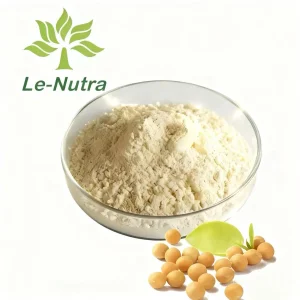
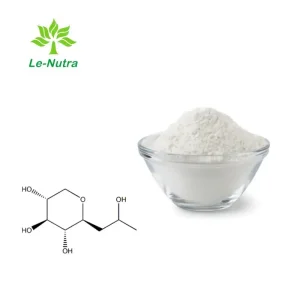
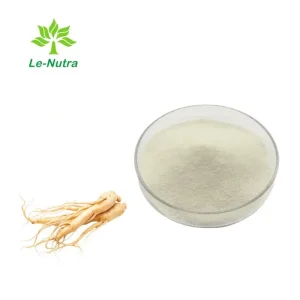
High-Bioavailability Cosmetic Actives & Peptide Complexes
Broaden your active skin formulation portfolio with plant isolates, peptide synthetics, and multi-functional barrier restorers.
Procurement & Formulator FAQ
Frequently Asked Questions on Purchasing Retinol & Niacinamide Together
Key technical insights on ingredient purity, commercial packaging standards, and bulk formulation stability.
Why should cosmetic brands purchase Retinol and Niacinamide together from a single manufacturer?
Sourcing both active compounds from a single certified producer ensures matched quality metrics, synchronized Certificate of Analysis parameters, reduced analytical friction in cGMP facilities, and bulk shipping efficiencies under uniform inert conditions. Furthermore, our technical R&D lab provides pre-tested formulation compatibility dossiers that demonstrate phase stability when these two actives are compounded.
What is the maximum allowed concentration of free Nicotinic Acid in bulk Niacinamide?
For sensitive skin and co-formulation with retinol, enterprise-grade Niacinamide must feature a free nicotinic acid threshold strictly under 100 ppm, with our premium cosmetic grade delivering less than 50 ppm. Free nicotinic acid causes microvascular vasodilation (erythema and flushing), which amplifies perceived skin irritation if combined with active retinoids.
How does industrial microencapsulation preserve Retinol efficacy in aqueous Niacinamide serums?
Microencapsulated or liposomal retinol houses the hydrophobic active inside a protective phospholipid or polymeric matrix. This barrier prevents ambient oxygen, traces of water, and acidic or basic catalysts in the water phase from breaking the conjugated double-bond system of the retinol molecule, preserving active titers over typical 24- to 36-month shelf lives.
What export and qualification documentation is provided with each commercial shipment?
Every lot is accompanied by a batch Certificate of Analysis (CoA) itemizing HPLC assay purity, heavy metals, microbial counts, particle size distribution, residual solvents, English Safety Data Sheets (SDS), and Non-Animal Testing statements conforming to EU Regulation (EC) 1223/2009 and US FDA MoCRA standards.