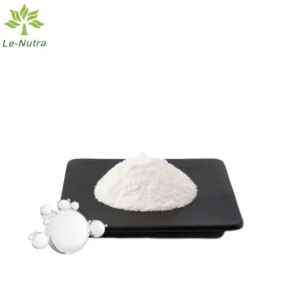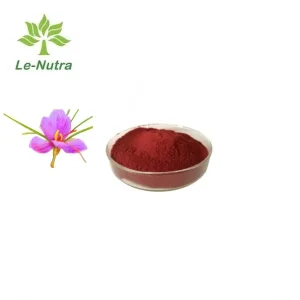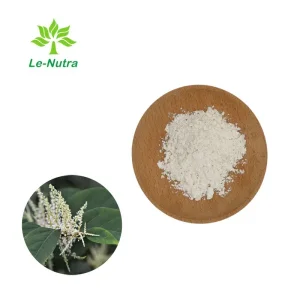
Featured Commercial Formulations
High-Purity Botanical Extracts & Peptides
Laboratory-qualified raw materials tailored for international cosmeceutical and nutraceutical lines.
Market Dynamics & Global Status
The Global Skin Lightening & Depigmentation Industry
Transitioning from toxic bleaches to safe, targeted molecular tyrosinase inhibitors, cellular antioxidants, and melanosome transfer blockers.
3,000t
Annual Extract Capacity
60,000m²
Certified Facility Footprint
40+
Export Destinations
14+
Years Continuous R&D
Clean-Science Paradigm Shift
Global regulatory agencies—including the European SCCS, US FDA, and ASEAN Cosmetic Committee—have progressively restricted hazardous agents such as hydroquinone and mercury salts. Market preference is unequivocally redirected toward bio-compatible inhibitors like Alpha-Arbutin and Tranexamic Acid, combining high efficacy with minimal cellular cytotoxicity.
Multi-Pathway Depigmentation
Contemporary cosmeceutical formulation bypasses crude mono-therapy. Advanced brightening regimes rely on synergistic multi-pathway mechanics: concurrently impeding baseline tyrosinase transcription, attenuating UV-triggered plasmin activity, mitigating oxidative ROS triggers via Resveratrol, and preventing melanosome uptake into keratinocytes.
OEM Scalability & Standardization
Commercial viability hinges entirely on lot-to-lot consistency. Without rigorous high-performance liquid chromatography (HPLC) standardization, natural botanical derivatives fluctuate wildly in bioactivity. Leading OEM factories leverage automated crystallization, vacuum low-temperature concentration, and cleanroom spray drying to guarantee uniform active assays.
Technical Whitepaper
Top 10 Safe Skin Lightening Ingredients: Formulation Matrix
A rigorous biochemical assessment of validated depigmenting compounds, their cellular targets, and optimal formulation parameters.
| Active Compound | CAS Identity | Biological Mechanism | Primary Target | Recommended Usage | Safety Index |
|---|---|---|---|---|---|
| Alpha-Arbutin | 84380-01-8 | Reversible competitive tyrosinase inhibitor | Melanocyte melanosomes | 0.5% – 2.0% | SCCS Cleared |
| Tranexamic Acid | 1197-18-8 | Plasmin inhibition; suppresses arachidonic cascade | UV/Inflammatory hyperpigmentation | 1.0% – 3.0% | Non-irritating |
| Niacinamide (Vit B3) | 98-92-0 | Downregulates melanosome transfer to keratinocytes | Keratinocyte-melanocyte junction | 2.0% – 5.0% | High Tolerance |
| Mandelic Acid | 90-64-2 | Accelerated epidermal shedding via large-molecule AHA | Stratum corneum turnover | 3.0% – 10.0% | Sensitive Skin Safe |
| Resveratrol (Giant Knotweed) | 501-36-0 | Suppresses TRP-1 & TRP-2 transcription via MITF | Direct oxidative enzyme downregulation | 0.2% – 1.0% | Bio-Active |
| Ellagic Acid (Pomegranate Peel) | 476-66-4 | Chelates copper ions at tyrosinase active site | Enzymatic active pocket chelation | 0.5% – 2.5% | Natural Botanical |
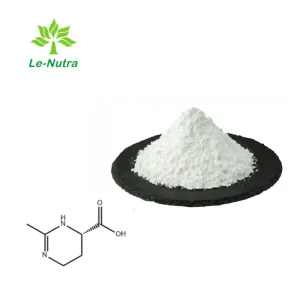
| Ectoine | 96702-03-3 | Inhibits Langerhans cell stress-induced pigmentation | Cell membrane hydration shell | 0.5% – 2.0% | Extremolyte Grade |
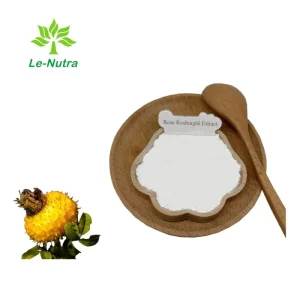
| Rosa Roxburghii Extract | Botanical Blend | Superoxide dismutase (SOD) & high-potency Vit C cascade | Free-radical neutralization | 1.0% – 4.0% | Non-Phototoxic |
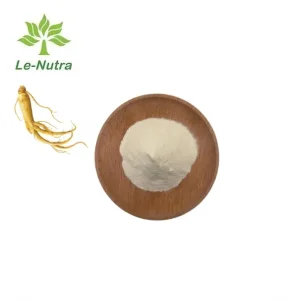
| Ginseng Oligopeptide | Naturally Derived | Regenerates mitochondrial respiration, clears lipofuscin | Dermal-epidermal remodeling | 0.1% – 1.0% | Biomimetic |
| Daidzein Powder | 486-66-8 | Estrogenic pathway balancing; post-inflammatory pigment calming | Estrogen receptor-mediated regulation | 0.2% – 1.5% | Standardized Isoflavone |
Localized Implementation
Regional Application Scenarios & Tailored Formulation
Adapting active depigmenting mechanisms to diverse phototypes, climatic conditions, and regional consumer rituals.
Asia-Pacific (APAC): Glass-Skin & Melasma Deficits
APAC regimens focus on luminous clarity and the reduction of stubborn melasma across Fitzpatrick skin types III–IV. Formulations favor synergistic liquid serums featuring Tranexamic Acid (2-3%) and Alpha-Arbutin to clear post-inflammatory hyperpigmentation (PIH) without inducing rebound erythema or barrier sensitization.
North America & Europe: Photo-Damage & Age Spots
Western consumer applications target solar lentigines, actinic dyschromia, and tone unevenness driven by outdoor photodamage. B2B brands specify hybrid brightening-peel emulsions combining lipophilic Mandelic Acid with polyphenolic free-radical scavengers like Resveratrol and Pomegranate-derived Ellagic acid.
Middle East & LatAm: High-UV Barrier Shielding
Extreme solar irradiance and elevated temperatures require barrier-protecting brighteners. Our OEM partners combine extremolytes like Ectoine with Rosa Roxburghii SOD Extract, safeguarding epidermal cellular matrices from heat shock and free radicals while maintaining skin radiance under harsh conditions.
Factory Resilience & Efficiency
China's Upstream Supply Chain: Competitive Resiliency
Combining localized raw material sourcing, automated processing infrastructure, and vertically integrated scale.
Raw Material Sourcing Proximity
Located in Xi'an, Shaanxi—adjacent to the Qinling Mountains' bio-reserve—our processing facilities maintain direct access to vast botanical supplies, drastically reducing domestic transit latency, lowering carbon footprint, and preserving harvest freshness.
Continuous Closed-Loop Automation
Our 60,000 m² hub operates six automated production lines with computerized PLC systems regulating extraction temperature, multi-effect countercurrent concentration, and cleanroom vacuum drying for batch reproducibility.
Cost-Structure Elasticity
By leveraging China's integrated chemical upstream engineering and heavy solvent reclamation networks, we mitigate input cost spikes, giving global partners competitive pricing and rapid scaling from pilot assays to multi-ton containers.
Agile Export Logistics
Direct integration with international transit nodes in Xi'an (including regular China-Europe rail links and air freight hubs) ensures seamless documentation routing, pre-cleared customs files, and rapid dispatch across 40+ destinations worldwide.
Innovation Horizon
Technical Roadmap: Next-Gen Bio-Synthetics & Delivery
Anticipating the market's evolving clean beauty expectations through biomanufacturing and advanced molecular delivery.
Biomimetic Fermentation & Green Synthesis
Moving beyond harsh chemical synthesis, our R&D team optimizes non-GMO microbial enzymatic transformations for small-molecule peptides and glycosylated derivatives, generating purer isomeric fractions without hazardous heavy metal catalysts.
Liposomal & Nano-Encapsulation Delivery
Hydrophilic and oxidation-prone brightening agents (e.g., Tranexamic Acid and Resveratrol) degrade rapidly in typical water-phase lotions. We develop specialized phospholipid encapsulation systems that stabilize sensitive actives and enhance stratum corneum penetration.
Sustainable Upcycling & EcoVadis Standards
Aligning with circular bio-economies, our plant extract series incorporates recovered agricultural byproducts (including cold-pressed fruit rinds and botanical seed hulls), audited under continuous EcoVadis environmental and social governance matrices.
Regulatory Auditing
Global Compliance & Rigorous QA Documentation
Speed up your regulatory filings and brand dossier approvals with audit-ready documentation.
Batch-Specific HPLC/GC COAs
Every shipment is matched to an authentic batch Certificate of Analysis identifying active marker concentrations, moisture content, mesh particle dispersion, total ash, residual solvents, and rigorous heavy metal limits (Pb, As, Hg, Cd < 1ppm).
Microbiological & Allergen Control
All active powders undergo irradiation or cold microfiltration to verify compliance with USP/EP standards (Total Aerobic Plate Count < 1,000 cfu/g; Yeast/Mold < 100 cfu/g), certified non-GMO and TSE/BSE-free for food and supplement safety.
Global Dossier Alignment
Our regulatory support team supplies bilingual SDS/MSDS, Technical Data Sheets (TDS), and stability profiles mapped to US FDA INCI designations, European CPNP filings, and China NMPA raw ingredient technical codes.
Procurement & Technical Inquiries
Frequently Asked Questions for Formulation Engineers
Essential guidance on solubility, compatibility, pH ranges, and OEM supplier qualification.
What makes Alpha-Arbutin fundamentally safer than Hydroquinone?
Alpha-Arbutin is an alpha-glucoside conjugate of hydroquinone. Instead of inducing melanocyte necrosis or irreversible cytotoxicity (which can trigger ochronosis), Alpha-Arbutin reversibly inhibits tyrosinase activity without destroying melanocyte viability. Clinical reviews and European SCCS guidance affirm its high safety profile up to 2% in facial formulations.
How should formulators protect Resveratrol and botanical polyphenols from oxidation?
Polyphenols readily oxidize when exposed to air, light, and elevated pH. We suggest keeping bulk powder storage under vacuum seal, formulating within a final pH window of 4.5–6.0, incorporating synergistic antioxidants (such as Sodium Metabisulfite, Tocopherol, or Ferulic Acid), or deploying our proprietary liposomal encapsulation grades.
What is your production capacity and minimum order quantity (MOQ)?
Our manufacturing base in Xi'an processes over 3,000 tons annually across six automated production lines. Our baseline evaluation MOQ is 1 kg for pilot tests and formulation qualification, scaling directly to standard commercial pallet shipments (25 kg fiber drums) for enterprise production.
How does Tranexamic Acid interact with acidic actives in whitening serums?
Tranexamic Acid functions as an amphoteric amino acid derivative that performs reliably within a pH range of 3.0 to 6.5. It pairs well with Niacinamide, Alpha-Arbutin, and mild AHAs like Mandelic Acid. Formulations should maintain stable emulsification systems to prevent ionic precipitation over long-term shelf storage.
What third-party testing and quality certifications accompany each shipment?
Every commercial lot is verified via internal HPLC/UV assays and can be counter-inspected by independent certified testing houses (SGS, Eurofins, Pony Testing). Facilities maintain ISO9001, ISO22000, EcoVadis ratings, Halal, and Kosher certifications, providing complete traceability from raw botanical harvest to finished powder.
Direct OEM Supply Portfolio
High-Assay Cosmetic Actives & Functional Botanicals
Order batch-documented raw ingredients straight from our Xi'an processing center.