Featured Botanical & Bioactive Protein Catalog (Part I)
Explore our factory-direct bulk portfolio engineered for high-solubility, targeted molecular weights, and strict compliance with international cosmetic and nutraceutical specifications.
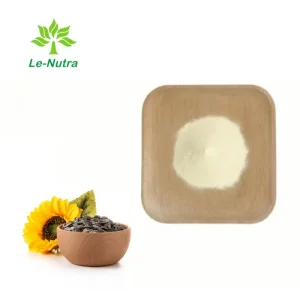
1. Executive Summary & Molecular Spectrum of Hydrolysed Groundnut Protein
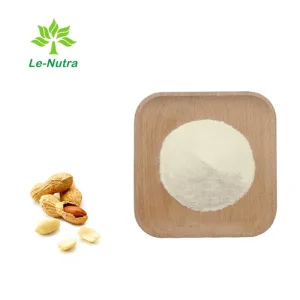
Hydrolysed Groundnut Protein (also known industrially as Hydrolyzed Peanut Protein) represents an advanced bio-engineered plant ingredient derived through controlled enzymatic cleavage of oil-extracted groundnut meal (Arachis hypogaea). As global cosmetic formulators and nutraceutical manufacturers shift away from animal-derived hydrolyzed proteins (collagen, keratin, elastin) and soy-based alternatives, groundnut protein hydrolysates have emerged as a premier bio-functional solution.
Biochemically, intact groundnut proteins consist predominantly of storage globulins—specifically Arachin (approx. 63%) and Conarachin (approx. 33%). Through targeted endo- and exo-peptidase enzymatic digestion, these complex quaternary structures are fractured into low-molecular-weight oligopeptides and free amino acids ranging between 500 Da and 3,000 Da. This precise molecular mass reduction dramatically enhances water solubility, cutaneous penetration, film-forming capability, and nitrogen bioavailability across acidic and alkaline pH ranges.
From a functional standpoint, the unique amino acid matrix of groundnut hydrolysates is unusually rich in Glutamic Acid (20.5-22.1%), Arginine (11.2-13.5%), and Aspartics (11.0-12.8%). Arginine plays a critical biological role in vascular microcirculation and skin barrier repair, while glutamic acid derivatives act as natural humectants capable of forming hydrogen bonds with moisture molecules. This technical breakdown explains why global B2B procurement teams prioritize OEM groundnut hydrolysates for high-end personal care formulations and high-absorption clinical nutritional matrices.
2. Global Enterprise Procurement Dynamics & Demand Matrix
The international market demand for OEM Hydrolysed Groundnut Protein has expanded exponentially across three primary enterprise sectors: Personal Care & Cosmetics, Sports & Clinical Nutrition, and Bio-based Agricultural Auxiliaries. Understanding regional procurement intent allows OEM buyers to select appropriate ingredient grades and optimize pricing structures.
Personal Care & Cosmeceuticals
Demand is centered in North America, Western Europe, and East Asia (South Korea/Japan). Formulators use cosmetic-grade groundnut hydrolysates in anti-aging serums, hair conditioning rinses, and barrier-restoring lotions. The low MW fraction (<1000 Da) effectively penetrates hair cuticles to increase tensile strength and moisture retention by up to 34%.
Nutraceuticals & Medical Foods
Specialized sports nutrition brands require rapid-absorption amino peptide powders. Hydrolyzed groundnut protein offers an ideal plant-based solution with minimal visceral stress, excellent dispersibility in instant beverages, and zero cholesterol. Enzymatic debittering protocols eliminate native bean off-flavors.
Sustainable Industrial & Agriculture
In agricultural biostimulants, groundnut protein hydrolysates serve as rich organic nitrogen sources (>12% N) and chelating agents for micronutrients. The free amino acids trigger plant stress tolerance mechanisms and accelerate chlorophyll synthesis in eco-friendly farming systems.
Procurement Risk Mitigation: Enterprise buyers must ensure that contract manufacturers implement ultra-fine filtration to clear residual peanut allergens (Conarachin allergen Ara h 1 and Ara h 2). Modern OEM enzymatic processing reduces specific IgE-binding epitopes, rendering high-degree hydrolysates significantly safer than raw protein isolates for topical and industrial applications.
3. Macro Industry Solutions & Formulation Engineering
Replacing traditional animal or synthetic conditioning agents with OEM Hydrolysed Groundnut Protein offers distinct formulation advantages for clean-label, vegan, and cruelty-free consumer brands. Below is a comparative formulation breakdown highlighting structural performance metrics.
| Performance Metric | Hydrolysed Groundnut Protein | Hydrolyzed Collagen (Bovine) | Hydrolyzed Wheat Protein | Hydrolyzed Soy Protein |
|---|---|---|---|---|
| Primary Source | Upcycled Plant Seed (Non-GMO) | Animal Connective Tissue | Cereal Grain (Gluten) | Legume Grain (GMO Risk) |
| Arginine Content (%) | 11.5% - 13.5% (Ultra High) | 7.5% - 8.2% | 3.2% - 4.1% | 7.0% - 7.8% |
| Gluten-Free Compliance | 100% Gluten-Free Native | Gluten-Free | Contains Gluten Traces | Gluten-Free |
| Film-Forming Elasticity | High Flexible Protective Shield | Moderate Rigid Film | Moderate Film | Low-Moderate Film |
| Solubility Range (pH 3.0 - 8.0) | > 95% Clear Solution | > 98% Clear Solution | Cloudy at pH 4.0 - 5.0 | Precipitates near pI (4.5) |
| Environmental Sustainability | Low Carbon / Water Footprint | High Carbon Footprint | Moderate Footprint | Deforestation Risk |
Formulation Synergy & Compatibility Guidelines
In cosmetic chemistry, Hydrolysed Groundnut Protein exhibits outstanding synergy with active cosmetic ingredients such as Sodium Hyaluronate, Mandelic Acid, L-Theanine, and Botanical Extracts. Because of its amphoteric peptide profile, it acts as a secondary emulsifier and foam stabilizer in personal care wash formulations, reducing skin irritation caused by harsh anionic surfactants (e.g., SLES).
4. Technical Roadmap & OEM Manufacturing Process Flow
Producing commercial-grade Hydrolysed Groundnut Protein with consistent molecular distribution, zero microbial contamination, and neutral organoleptic properties requires a controlled multi-stage process. OEM manufacturers utilize state-of-the-art bioprocessing equipment.
Stage 1: Cold Pressing & Supercritical Defatting
High-grade groundnut seeds undergo mechanical de-hulled cleaning followed by low-temperature hydraulic pressing to extract raw peanut oil. Residual meal is subjected to food-grade solvent or supercritical CO2 extraction, reducing lipid content to below 0.5%. Low temperature maintains native protein secondary structures prior to hydrolysis.
Stage 2: Targeted Multi-Enzyme Hydrolysis
Defatted meal is slurried in purified reverse-osmosis water. A specialized cocktail of food-grade endopeptidases (Alcalase, Neutrase) and exopeptidases (Flavourzyme) is introduced under precise temperature (45–55°C) and pH conditions. This multi-stage enzymatic cleavage selectively targets peptide bonds to maximize small bioactive oligopeptide yield.
Stage 3: Ultrafiltration Membrane Fractionation
The liquid hydrolysate passes through multi-stage ceramic and polymeric ultrafiltration membranes with molecular weight cut-offs (MWCO) of 10 kDa, 3 kDa, and 1 kDa. This process isolates targeted peptide fractions while filtering out enzyme residues, high-molecular allergens, and insoluble cellular matter.
Stage 4: Carbon Debittering & Spray Drying
The clarified peptide stream is treated with food-grade activated carbon columns to adsorb hydrophobic bitter peptides and color pigments. Finally, concentrated liquid is spray-dried in a Class 100,000 cleanroom environment using low-temperature inlet air to preserve thermal-sensitive peptide bonds, yielding a fine, off-white, free-flowing powder.
5. Global Commercial Status & Pricelist Structure
Understanding the cost drivers behind OEM Hydrolysed Groundnut Protein manufacturing allows procurement executives to negotiate optimal volume contracts. Wholesale pricing is primarily influenced by:
1. Raw Seed Market Volatility: Crop yields, weather conditions, and international oilseed commodity indexes.
2. Degree of Hydrolysis (DH%): Higher DH% requires extended enzymatic digestion cycles, ultrafiltration passes, and specialized debittering, increasing unit production cost.
3. Purity & Certification Grade: Cosmetic vs Food Grade, Halal, Kosher, EcoVadis sustainability compliance, and heavy metal testing thresholds.
| Ingredient Grade | Key Specification | MOQ (Minimum Order) | Estimated Wholesale Price Range (FOB) | Primary Industrial Application |
|---|---|---|---|---|
| Food / Ag Biostimulant Grade | Protein > 80%, NSI > 85%, Dark Powder | 1,000 kg (1 MT) | $8.50 - $13.00 / kg | Agricultural Biostimulants, Animal Feed |
| Nutraceutical Beverage Grade | Protein > 90%, Debittered, Instantized | 500 kg | $15.00 - $22.00 / kg | Sports Powders, Clinical Nutritional Drinks |
| Cosmetic Active Grade (<2000 Da) | Protein > 92%, Light Powder, Low Ash < 2% | 100 kg | $28.00 - $42.00 / kg | Hair Care Conditoners, Anti-Aging Serums |
| Ultra-Pure Bioactive Peptide Fraction | MW < 1000 Da HPLC Verified, Ultra-Clean | 25 kg | $55.00 - $85.00 / kg | High-End Cosmeceuticals, Dermatology Actives |
Note: Prices serve as industry benchmarks and fluctuate based on seasonal contract terms, customized packaging specifications, and port-of-entry logistics.
6. Global Regulatory, Allergen & Compliance Framework
Navigating regulatory approval is critical when incorporating botanical protein hydrolysates into globally distributed consumer products. Full regulatory dossiers (COA, SDS, Allergen Declarations, Non-GMO Statements, ISO Certificates) are mandatory for smooth customs clearance and product safety audits.
INCI & CAS Identification
Standardized INCI Name: Hydrolyzed Peanut Protein (or Hydrolyzed Groundnut Protein). CAS Registry Number: 100085-39-0. EC Number: 309-353-8. Recognized across US FDA VCRP, European Cosing database, and China NMPA Inventory of Existing Cosmetic Ingredients.
Allergen Protocol & Testing
While peanuts are classified as major food allergens under US FALCPA and EU Regulation 1169/2011, highly hydrolyzed small peptides (<1000 Da) lose the conformational structure required to bridge IgE receptors. However, clear product labeling remains mandatory for ingestible formats.
Heavy Metals & Aflatoxin Limits
Strict QA protocols require high-performance LC-MS/MS testing for Aflatoxins (B1, B2, G1, G2) ensuring combined total < 4.0 ppb and B1 < 0.1 ppb. Heavy metals are held to stringent pharmaceutical thresholds: Lead < 2.0 ppm, Arsenic < 1.0 ppm, Cadmium < 0.5 ppm, Mercury < 0.1 ppm.
7. Frequently Asked Questions (Buyer & Formulator Intent)
Comprehensive Active Ingredients & Hydrolysed Peptide Portfolio (Part II)
Discover adjacent high-purity botanical extracts, active cosmetic molecules, and specialized plant protein hydrolysates available for global OEM contract manufacturing.