Choosing among the 2026 best Turmeric Rhizome Extract suppliers requires more than comparing prices or glossy product pages. Buyers need evidence, consistency, and practical manufacturing details. A reliable supplier should identify the plant source, extraction method, curcuminoid content, carrier ingredients, and storage conditions. Each detail matters when a golden powder becomes part of a capsule, beverage, or research formulation.
Dr. Bharat B. Aggarwal, a recognized curcumin researcher, stated, “Turmeric has been used for centuries in traditional medicine.” That history creates interest, but it does not replace modern quality control. Strong suppliers connect traditional knowledge with documented testing. Look for current certificates of analysis, batch numbers, microbiological results, heavy-metal screening, and pesticide testing. Independent laboratory verification adds useful confidence. GMP manufacturing and clear traceability matter even more.
The best supplier is not always the one advertising the highest percentage. A highly concentrated extract may suit one application, but not another. Buyers should compare bioavailability data, formulation support, minimum order quantities, lead times, and technical communication. Ask whether the supplier can provide representative samples and consistent results across multiple batches. A polished website proves very little by itself. That is easy to forget.
This guide evaluates leading suppliers through an experience-based and evidence-focused lens. It also recognizes uncertainty, because specifications can change without obvious warning. Some suppliers may disclose excellent testing, yet offer limited formulation support. Others may provide helpful technical guidance but lack transparent sourcing records. Careful comparison remains essential before selecting a long-term Turmeric Rhizome Extract partner.
2026 Best Turmeric Rhizome Extract Suppliers?
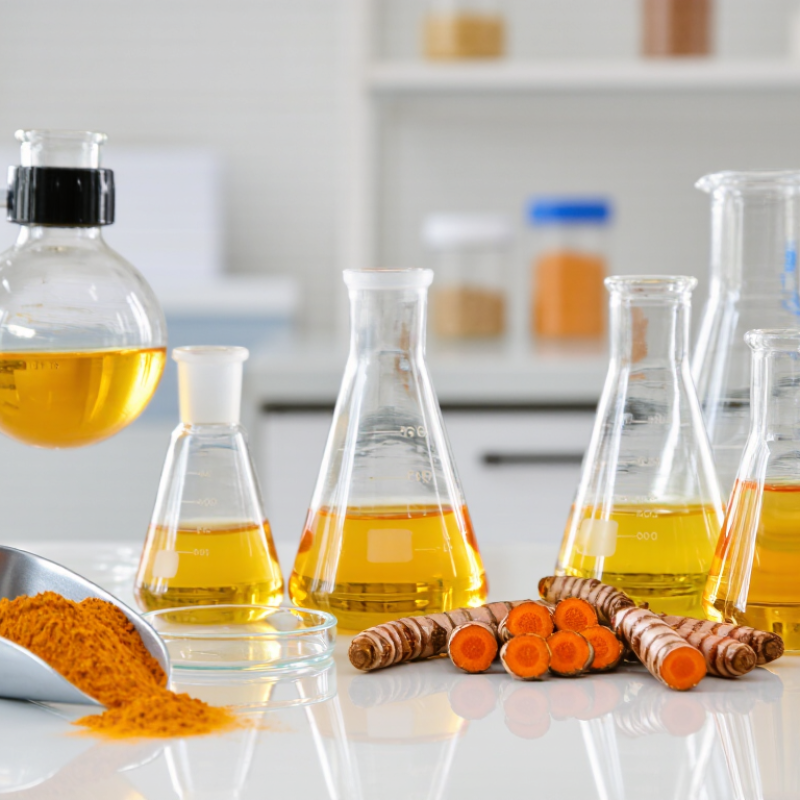
Turmeric rhizome extract comes from the underground stem of Curcuma longa. It is not simply powdered turmeric. The rhizomes are washed, sliced, and dried, often below 60°C to protect sensitive compounds. They are then milled before extraction with water, ethanol, or supercritical carbon dioxide. The extract is filtered, concentrated, dried, and standardized for curcuminoids or volatile oils.
The color can mislead. According to Grand View Research, the global turmeric market was valued at about USD 5.98 billion in 2023, with continued growth expected through 2030. This expansion increases pressure on suppliers to prove quality, not just offer bright yellow powder. A reliable supplier should provide HPLC results, botanical identity testing, microbial analysis, heavy-metal screening, residual-solvent data, and harvest traceability. The 2024 USP herbal medicines guidance also emphasizes identity, purity, strength, and contaminant control. These checks matter because storage humidity can change aroma, color, and extract stability.
Tips: Ask for the complete production flow, solvent details, extraction ratio, and certificate of analysis from the same batch. Compare curcuminoid results with the declared specification. Do not rely on color alone. In practical sourcing, I would also request retention samples and stability data. Supplier documents can look complete, yet batch consistency may still be weak. Independent testing is worth considering, especially when the extract will enter a regulated formulation.
Choosing the best turmeric rhizome extract supplier in 2026 requires more than comparing prices. Quality begins with authenticated rhizome material, clean processing records, and clear batch traceability. Ask where the turmeric was grown, when it was harvested, and how moisture was controlled after drying. Small details matter.
A reliable supplier should provide a recent certificate of analysis for every batch. Check curcuminoid levels using a validated HPLC method, not a vague “high potency” claim. Review results for heavy metals, pesticides, microbial contamination, and residual solvents. The testing laboratory should be independent, qualified, and clearly identified. Standardization must also be defined. A 95% curcuminoid extract is not interchangeable with a whole-rhizome extract containing natural oils and other compounds.
I also examine the specification sheet, stability data, packaging, and storage conditions. Light, heat, and humidity can affect color and potency. Request retain-sample policies and investigate unusual changes between batches. No supplier file is perfect. I have seen polished documents hide unclear sampling procedures. That is a warning. Ask direct questions and record the answers. A strong supplier welcomes audits, explains limitations, and avoids unsupported health claims. Practical experience shows that transparent communication often reveals more than a low quoted price.
When comparing 2026 turmeric rhizome extract suppliers, certification documents deserve careful attention. A certificate alone does not prove consistent quality. Check the issuing body, scope, site address, certificate number, and expiration date. Look for relevant systems such as HACCP, GMP, or ISO 22000. Organic claims need valid, product-specific documentation, not a generic factory certificate.
Traceability should connect each extract batch to a named farm group or growing region. Ask for harvest dates, lot numbers, drying conditions, processing records, and transport details. A reliable supplier should provide a clear chain from rhizome intake to sealed finished goods. Request recent certificates of analysis showing curcuminoid content, moisture, microbial limits, pesticides, heavy metals, and solvent residues. Independent laboratory testing adds useful confidence. Still, test results can vary between batches.
Tips: Ask for a mock recall exercise. Give the supplier one batch code and request its full history. The response should be organized and quick. Check whether records match the physical label. Missing links matter. Some suppliers present impressive paperwork but cannot explain unusual assay changes. That is a warning sign. Review corrective-action reports, audit findings, and certificate renewal history. Do not rely only on scanned files. A short video audit or site visit may reveal storage problems, unclear labeling, or weak segregation controls. My own review process would also leave room for doubt; even strong documentation cannot replace repeated batch performance.
The chart shows the typical certification or audit renewal interval for widely used food-safety, organic, and quality frameworks. ISO 22000 and FSSC 22000 generally follow a three-year certification cycle with surveillance audits, while BRCGS and organic certifications normally require annual reassessment or renewal. Buyers should verify the supplier’s current certificate, certification scope, issuing body, site address, audit status, and batch-level traceability records before purchasing turmeric rhizome extract.
Comparing the best turmeric rhizome extract suppliers in 2026 requires more than checking price per kilogram. Begin with identity testing, botanical authentication, and a clear specification sheet. The supplier should state curcuminoid concentration, extraction method, carrier materials, and intended application. Ask for a recent certificate of analysis from an independent laboratory. It should cover heavy metals, pesticide residues, microbiological quality, moisture, and batch number.
Traceability reveals practical supplier quality. Can the supplier identify the cultivation region, harvest period, processing site, and storage conditions? Reliable suppliers usually provide retained samples and explain their corrective-action process. Review their quality certifications, audit history, change-control procedures, and production capacity. A factory may offer impressive laboratory data but struggle with consistent supply. That matters.
Request samples from different batches, not only one attractive sample. Compare color, odor, dispersibility, assay results, and stability under your expected conditions. Check whether technical staff answer specific questions or send generic documents. I have found that communication often predicts future service. Still, documents can look better than daily operations. An on-site audit or qualified third-party assessment may expose gaps. Avoid unsupported bioavailability claims, unclear labeling, and unusually low prices. The cheapest extract may create testing delays, reformulation costs, or customer complaints. Choose evidence over polished promises.
| Comparison Dimension | Recommended 2026 Benchmark | What to Verify Before Selection | Importance | Practical Notes |
|---|---|---|---|---|
| Botanical Identity | The raw material should be identified as Curcuma longa rhizome, with the plant part clearly stated as rhizome. | Request the botanical name, plant part, country of origin, lot number, and a certificate of analysis that links the test results to the specific lot. | Critical | Prevents substitution with other Curcuma species or non-rhizome materials. |
| Extract Type | The specification should distinguish between conventional turmeric extract, curcuminoid-enriched extract, and standardized extract. | Confirm the extraction method, extract ratio, carrier materials, solvent statement, and whether the product is a dry extract or a dispersion powder. | Critical | Products with the same “turmeric extract” description may have substantially different compositions. |
| Curcuminoid Standardization | A clearly declared specification is preferable; common commercial grades include approximately 95% total curcuminoids on a dry basis, while lower-strength extracts are also used for different formulations. | Check the analytical method, result basis, acceptance range, and individual levels of curcumin, demethoxycurcumin, and bisdemethoxycurcumin where applicable. | Critical | Do not compare percentages unless the testing basis and method are equivalent. |
| Testing Method | Quantitative assay should use a validated chromatographic method, commonly HPLC or UPLC, with documented system suitability and reference standards. | Ask for the method number or method description, chromatograms when appropriate, laboratory qualifications, and date of analysis. | Critical | A numerical result without a transparent method is difficult to compare or audit. |
| Identity and Adulteration Controls | Supplier testing should be capable of detecting undeclared synthetic curcumin, unauthorized dyes, starches, fillers, and other botanical substitutions. | Review identity testing, microscopy or chromatographic fingerprinting, targeted adulteration screening, and the supplier’s investigation procedure for abnormal results. | Critical | Identity testing should be separate from potency testing. |
| Microbiological Quality | The finished extract should meet the microbiological limits required by the destination market and intended application. | Verify total aerobic microbial count, total yeast and mold count, bile-tolerant Gram-negative bacteria where relevant, and absence or limits for specified pathogens. | Critical | Limits vary according to food, supplement, cosmetic, or pharmaceutical use. |
| Heavy Metals | Testing should cover lead, cadmium, arsenic, and mercury using a suitably validated technique such as ICP-MS or ICP-OES. | Request results for each metal, reporting units, detection limits, test date, and comparison with the legal limits of the importing country. | Critical | Do not accept only a general statement such as “heavy metals pass.” |
| Pesticide Residues | A multi-residue pesticide screen should be appropriate for turmeric rhizome and the intended export market. | Confirm the analyte list, reporting limits, laboratory accreditation status, and compliance with applicable maximum residue limits. | High | Agricultural origin and processing controls strongly influence residue risk. |
| Mycotoxins and Contaminants | Risk-based testing should address contaminants relevant to dried botanical materials, including aflatoxins where required by the destination market. | Review the supplier’s hazard assessment, test frequency, analytical limits, and corrective-action process for out-of-specification results. | High | Testing expectations differ by jurisdiction and product category. |
| Residual Solvents | Solvent residues should comply with the requirements applicable to the extraction solvent and the finished product category. | Confirm the solvent system, residual-solvent test results, analytical method, and whether the specification follows the relevant pharmacopeial or food standard. | High | Water, ethanol, and other solvent systems create different control requirements. |
| Physical Specifications | The specification should define appearance, color, odor, moisture or loss on drying, particle size, bulk density, and solubility or dispersibility when relevant. | Compare the supplier’s specification sheet with your manufacturing process, filling equipment, storage conditions, and finished-product requirements. | High | Physical properties can affect blending, flowability, dissolution, and dose uniformity. |
| Bioavailability Technology | If enhanced absorption is claimed, the delivery system and supporting evidence should be explicitly defined rather than described only as “high absorption.” | Review the carrier or formulation technology, ingredient composition, stability data, human or in-vitro evidence, and regulatory acceptability of the claims. | High | Enhanced-bioavailability materials are not directly comparable with standard extracts on potency alone. |
| Quality Management System | The manufacturing site should operate under a documented quality system appropriate for botanical ingredients and the target market. | Check current third-party certificates, audit scope, certificate validity, change-control procedures, deviation handling, CAPA records, and document-control practices. | Critical | A certificate should identify the actual manufacturing site and covered product scope. |
| Traceability | Each finished lot should be traceable from incoming rhizome or extract material through processing, testing, packaging, and shipment. | Request a sample traceability record, batch coding format, recall procedure, and retention-sample policy. | Critical | Traceability should work in both directions: supplier-to-customer and customer-to-source. |
| Stability and Shelf Life | Shelf life should be supported by stability data under defined packaging and storage conditions, not only by a fixed calendar period. | Review stability protocol, test intervals, packaging configuration, storage conditions, retest date, and results for potency, moisture, color, and microbiology. | High | Light, oxygen, heat, and moisture may affect curcuminoid-containing powders. |
| Packaging and Storage | Packaging should protect the powder from moisture, light, contamination, and excessive oxygen exposure during normal transport and storage. | Confirm inner liner material, container type, net weight, tamper evidence, storage instructions, palletization, and transport requirements. | High | Packaging suitability should be evaluated together with the validated shelf life. |
| Regulatory Documentation | A complete technical package should be available for the intended market and product category. | Typical documents include specification, certificate of analysis, safety data sheet, allergen statement, GMO statement, irradiation statement, solvent statement, and origin declaration. | High | The required document set depends on the country and intended use. |
| Minimum Order Quantity | The best supplier is not necessarily the one with the lowest minimum order; the quantity should match forecast demand, shelf life, and cash-flow capacity. | Compare standard stock quantities, custom-production minimums, sample policy, partial-order options, and fees for customized specifications. | Medium | Low minimum quantities may carry higher unit costs or shorter remaining shelf life. |
| Lead Time and Supply Continuity | Suppliers should provide a realistic lead-time range for samples, standard lots, custom lots, and repeat orders. | Request historical on-time delivery data, production capacity information, backup raw-material arrangements, and a supply-continuity or shortage-notification procedure. | High | Seasonality and agricultural sourcing can affect availability and price. |
| Commercial Evaluation | Compare total landed cost rather than quoted price alone, including product, testing, packaging, freight, duties, insurance, and quality-related fees. | Use the same specification, incoterm, currency, shipment size, payment terms, and delivery destination for every quotation. | High | A lower price may reflect lower assay, weaker documentation, or different packaging. |
| Sample Qualification | A supplier should pass document review, laboratory testing, pilot-scale processing, and packaging compatibility checks before commercial approval. | Compare the received sample with the approved specification for identity, assay, contaminants, color, odor, flow, dispersion, and performance in the intended formulation. | Critical | A sample approval should not replace testing of the first commercial lot. |
The right turmeric rhizome extract supplier depends on your product, not a ranking alone. A capsule maker may need a concentrated extract with a defined curcuminoid range. A drink developer may care more about dispersibility, flavor, and sediment. Write down your target dose, format, and serving size before requesting samples. Small details matter.
Ask how the extract is made and which tests support its specifications. Request a recent certificate of analysis, with methods listed for identity and curcuminoid content. Check whether testing also covers relevant contaminants, such as heavy metals and microbes. Good paperwork helps, but it is not the whole story. Ask how each lot is traced back to its raw material and how changes are communicated. If the answers feel vague, pause.
Then test the material in your actual formula. A powder that looks fine in a sample jar may clump in a beverage or change a capsule’s fill weight. Compare aroma, color, flow, and performance across more than one lot when possible. Discuss minimum order quantities, lead times, packaging, and storage conditions early. These can shape your launch as much as the extract itself. No supplier can remove every uncertainty; I would still leave room for a second trial.
It is made from the underground stem of turmeric. The rhizomes are washed, sliced, dried, milled, and extracted.
Producers may use water, ethanol, or supercritical carbon dioxide. They filter and concentrate the extract, then dry and standardize it.
Color can mislead. A bright yellow powder does not confirm identity, strength, purity, or consistent production.
Ask for a batch-specific certificate of analysis, botanical identity results, and testing for microbes, heavy metals, and residual solvents. Harvest traceability and stability data are useful too.
Verify the issuing body, site address, scope, certificate number, and expiration date. Organic claims should have product-specific supporting documents.
Records should connect the finished extract to its growing region or farm group. Ask for harvest dates, lot numbers, drying conditions, processing records, and transport details.
Match the specification to the format. Capsules may need a defined curcuminoid range, while drinks may require good dispersibility and low sediment.
Yes. A powder may clump in a drink or change capsule fill weight. Compare aroma, flow, color, and performance across more than one lot when possible.
Confirm minimum order quantities, lead times, packaging, and storage conditions. Even complete paperwork leaves some uncertainty; I would still request another trial.
This guide explains what Turmeric Rhizome Extract is, how it is produced, and why processing methods can influence its color, flavor, composition, and functional consistency. It outlines key factors for evaluating extract quality, including raw material identity, curcuminoid standardization, purity testing, contaminant screening, batch consistency, and suitable documentation. Readers will also learn how to interpret supplier certifications, manufacturing controls, traceability systems, and quality records before beginning a sourcing relationship.
To compare the best Turmeric Rhizome Extract suppliers in 2026, buyers should assess more than price. Important considerations include production capacity, specification flexibility, testing transparency, packaging, lead times, communication, and long-term supply reliability. The right supplier should match the intended product format, target market, dosage requirements, quality standards, and purchasing volume. A structured comparison process can help companies select a dependable source while supporting consistent product development and responsible procurement.

Typical reply within one business day (UTC+8).
[email protected] +86-29-86518603 Request a Catalog Contact us